

How Contractors Plan Temporary Power and Lighting During Glass
Quick answer: glass partition installation
Review focus: glass partition installation.
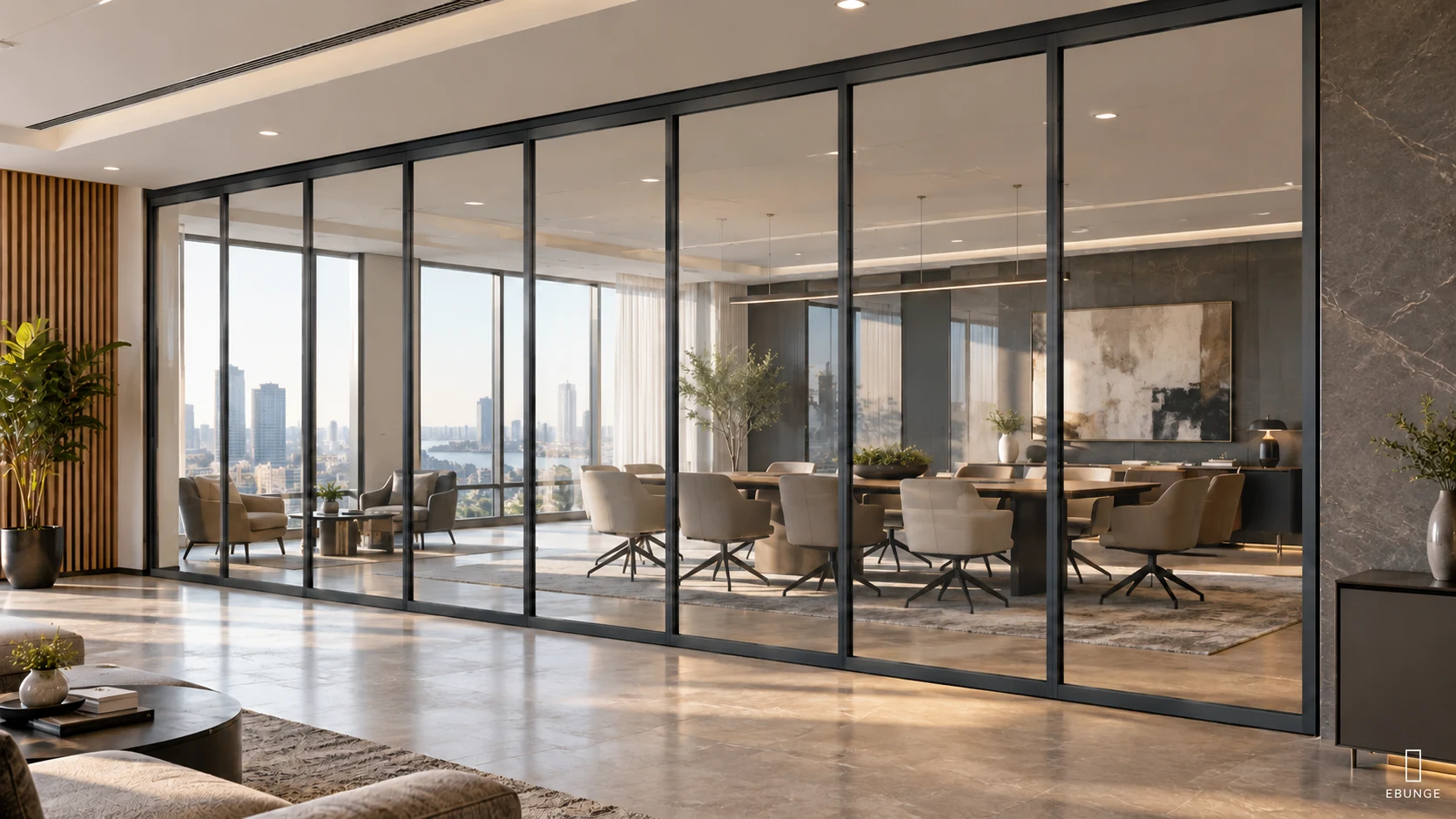
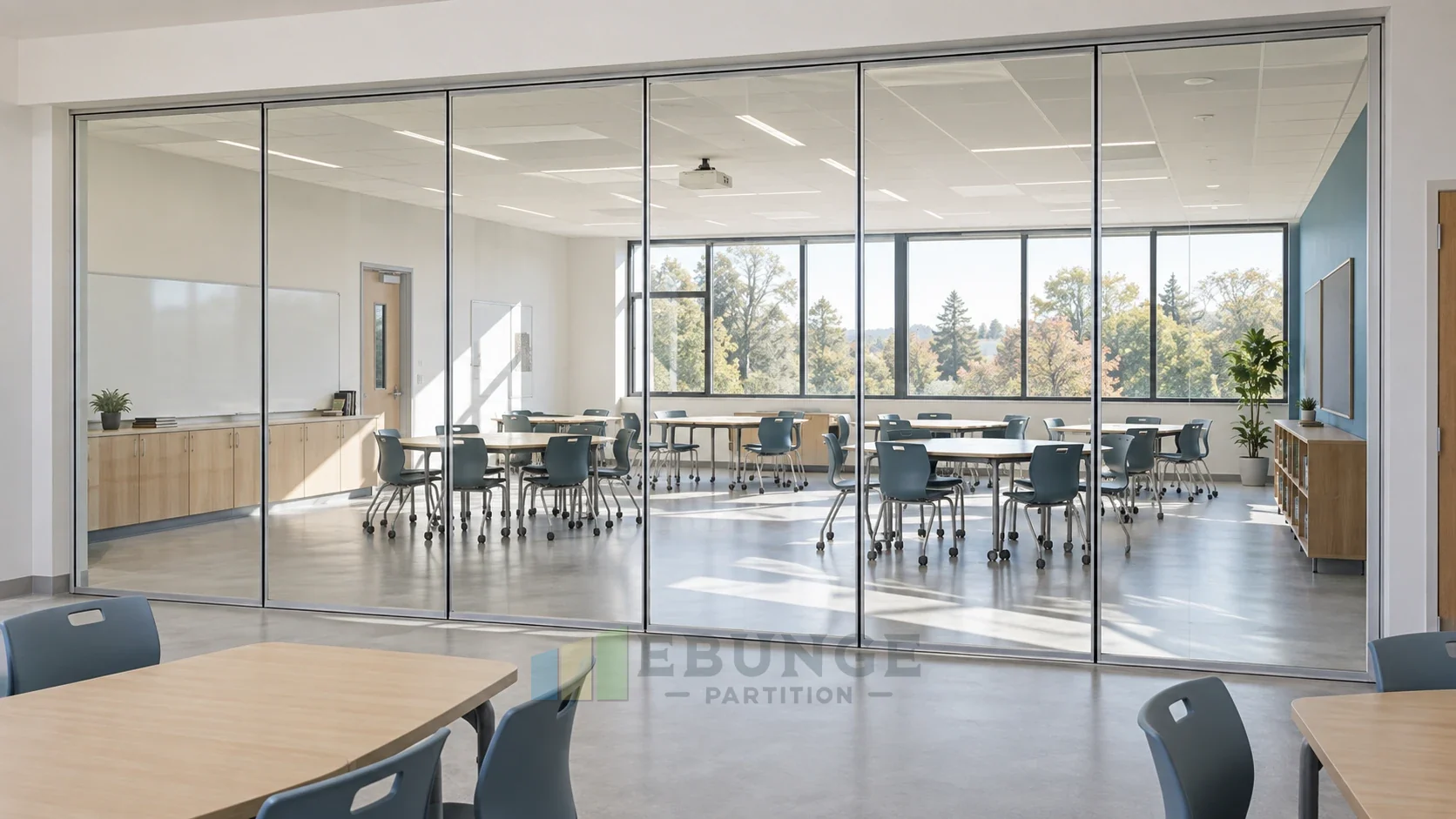
Glass partition installation temporary power planning is the stage where the site team decides how temporary electricity and task lighting will support the arrival, handling and positioning of top-hung movable panels. Because EBUNGE movable wall panels are individually movable, suspended from a top track and cross the opening without a floor track, the work zone stays clear at floor level. That changes where temporary services can safely sit, and it makes early coordination with the main contractor, electrical trade and site supervisor essential.
Why Temporary Power Planning Starts Before Panels Arrive
Project review term: glass partition installation.
Temporary power is usually treated as a site-wide topic, yet glass partition installation creates local conditions that a generic site plan may not capture. Panels are suspended from an overhead track, so the floor beneath the opening must remain free of trailing cables, distribution boards and standing lights during movement. If temporary services are placed along the partition line, they can obstruct the very route the panels are designed to follow.
The planning goal is therefore not simply to provide power. It is to provide power and light in positions that remain compatible with a clear floor, a continuous overhead route and a planned stacking position. Confirm the actual route, support conditions and dimensional requirements against project drawings before fixing any temporary service location.
Information Contractors Should Collect First
Coordination scope: glass partition installation.
Before ordering cable, fittings or lighting, gather the information that determines where temporary services can go. This is a coordination exercise, not a product selection exercise.
- Approved layout showing straight, turning and stacking routes for the movable panels.
- Planned stacking position and the clear floor area needed to reach it.
- The exact overhead route and support arrangement must be confirmed by the responsible project team from coordinated drawings.
- Existing or temporary distribution board positions and available ways to isolate circuits.
- Task lighting positions that illuminate the track line, panel edges and floor markings without standing in the movement path.
- Pass-door requirements and how temporary access will be maintained during installation.
Where any item is unclear, record it as an open question for the project team rather than assuming a default.
Coordinating Temporary Power With the Installation Sequence
Checklist focus: glass partition installation.
Before panels are delivered
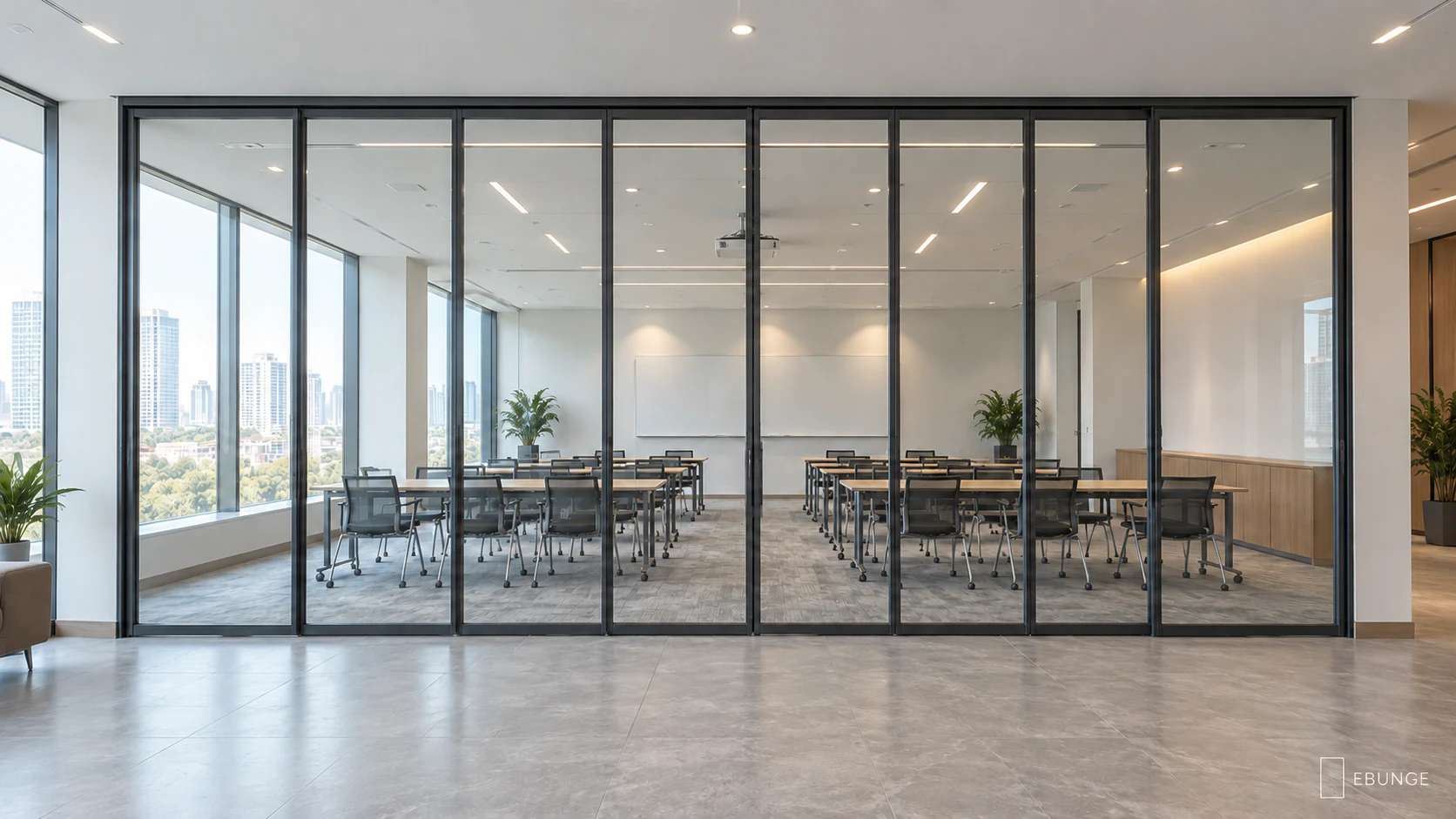
Confirm that temporary lighting reaches the full length of the track route, including turning points and the stacking area. Cable routes should be fixed overhead or along walls, not laid across the opening. Agree isolation points so that temporary supplies can be made safe if work stops.
During panel handling
Keep the floor clear along the movement path. Portable lighting should be positioned outside the route or protected so it cannot be struck by a moving panel. If temporary power is required close to the work face, confirm with the site supervisor that the position does not conflict with the panel route or the planned stacking position.
After panels are parked
The suitability of each route and parking arrangement depends on the approved layout, circulation, ceiling interfaces and operating sequence. Temporary lighting that was positioned for handling may need to be repositioned for inspection. Record any observations for the project file and confirm whether they fall within the agreed scope.
Task Lighting Choices for Glass and Frame Work
Glass surfaces reflect light, so a single high-output source can create glare that hides edges and joints. A more useful approach is layered task lighting: broad ambient light for the room, directional light along the track and floor line, and a portable source for close inspection. The exact fixtures, quantities and positions depend on the room, the ceiling height and the project programme.
Do not treat lighting positions as permanent design decisions. They are temporary measures that should be reviewed as the installation progresses and removed or relocated before handover.
Decision Checklist for Site Teams
| Check | What to confirm | Evidence needed |
|---|---|---|
| Route review | Straight, turning and stacking routes are marked and clear | Approved layout drawing |
| Power positions | Temporary supplies do not cross the panel route | Site coordination record |
| Lighting coverage | Track line, floor line and stacking area are lit | Site walk-through |
| Isolation | Circuits can be made safe during breaks | Electrical coordination note |
| Handover | Temporary services removed or relocated | Inspection record |
Common Coordination Problems and How to Reduce Them
Most temporary power problems on partition projects come from late changes rather than from the panels themselves. A distribution board placed after the layout was agreed, or a lighting stand moved into the stacking area, can interrupt the work sequence. The practical response is to treat temporary services as part of the installation plan and review them at the same coordination meetings.
Another common issue is assuming that a visible finish or frame profile tells the whole story.
Inspection, Handover and Documentation
Before handover, walk the installation with the temporary lighting still available. The exact route, junction arrangement, continuous overhead path and parking position must be confirmed from the coordinated project drawings. Confirm that temporary cables, boards and lights have been removed or relocated so they do not remain in the finished space.
Project documentation can be discussed with the EBUNGE team, including pass-door requirements and the information needed for review. Keep a record of temporary power positions, isolation points and any agreed changes so that the final file reflects what was actually installed.
FAQ
Does glass partition installation temporary power planning affect the panel layout?
It can. Temporary services placed along the partition line may conflict with the straight, turning or stacking routes. Review the layout first, then position temporary power and lighting around it.
Can temporary cables cross the opening during installation?
They should not remain across the movement path while panels are being moved. Route temporary cables overhead or along walls, and confirm positions with the site supervisor.
What lighting is useful for inspecting glass panels?
Layered task lighting is generally more useful than a single source because glass reflects light. Position directional light along the track and floor line, and use a portable source for close inspection.
Do movable glass partitions need a floor track for temporary power?
No. EBUNGE movable wall panels are top-hung and cross the opening without a floor track. Temporary power should be planned to keep the floor clear rather than to follow a floor track.
How early should temporary power be coordinated?
As early as the layout review, so that route, stacking position and lighting coverage are known before panels arrive. Confirm project-specific support, acoustic and dimensional requirements with the project team.
Can EBUNGE confirm acoustic performance from a drawing?
No.
Conclusion
Start with the approved layout, coordinate with the electrical trade, and confirm every project-specific requirement before work begins.
To discuss your project, review the framed movable glass partition range, browse products and solutions, or check applications and engineering resources. When your drawings are ready, contact EBUNGE to discuss pass-door requirements and project documentation.