

Project Closeout Records for Movable Glass Wall Systems
Quick project answer
Framed movable glass wall handover evidence is not a single certificate or a folder of photographs. It is a structured record that shows what was reviewed, what was confirmed, what remains project-specific, and how the installed system matches the coordinated design. For overseas contractors, architects, interior designers, owners and renovation teams, the goal is to make the handover package traceable without inventing performance claims that the drawings and documents do not support.
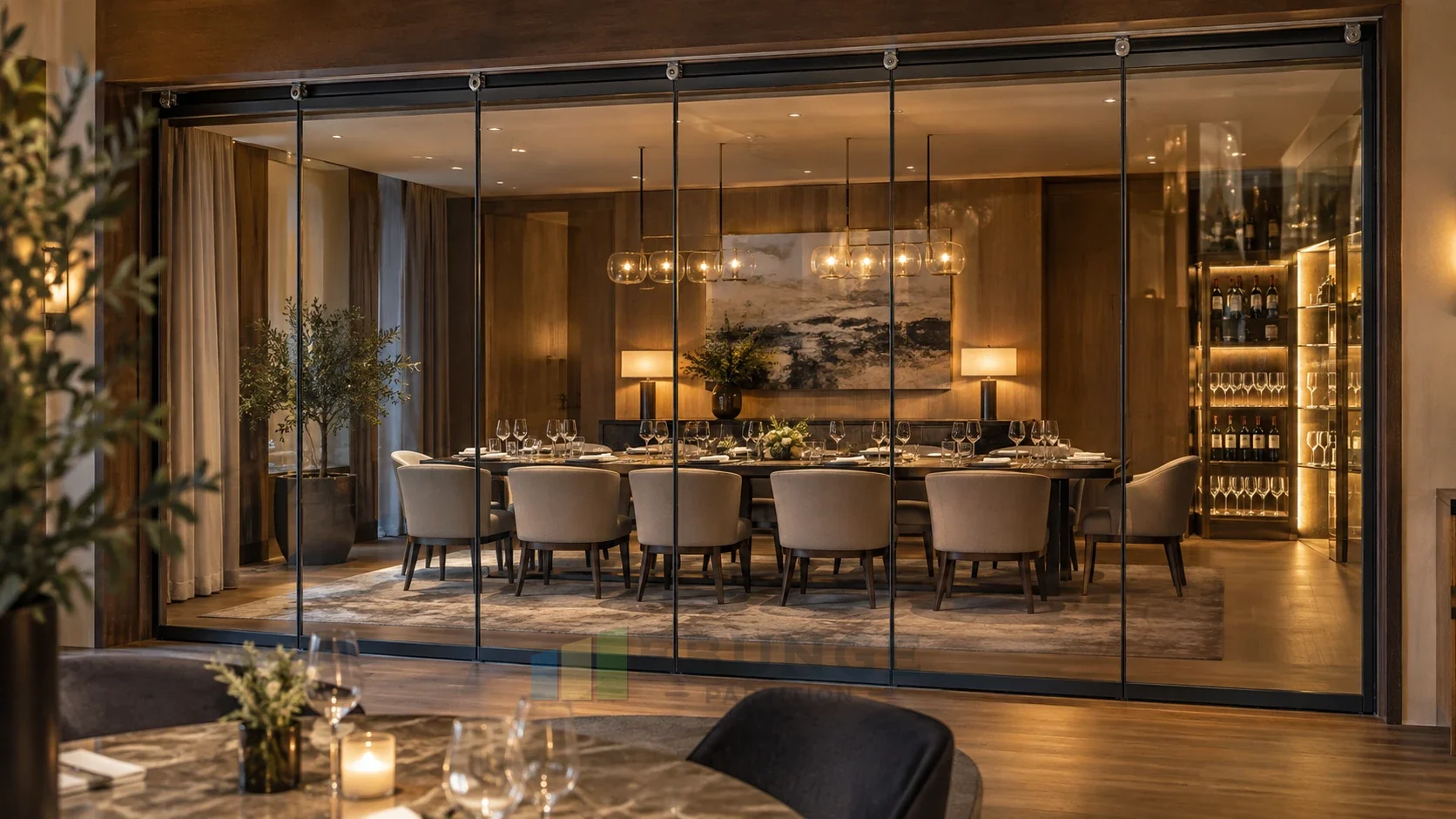
The starting point is the maintained product context: panels are individually movable, suspended from a top track, cross the opening without a floor track, and park at a planned stacking position. Straight, turning and stacking routes are reviewed from the layout. Finish options include laminate, melamine, fabric, leather, glass and other approved surfaces. Pass-door requirements and project documentation can be discussed. Everything else must be confirmed against the specific project.
Why Handover Evidence Needs a Defined Scope
A framed movable glass wall sits between several trades: structure, ceiling, finishes, glazing, hardware interfaces and the operating route. Handover evidence should therefore describe the boundary of each check rather than imply a universal result. Visible references can support layout discussion but do not verify hidden construction or performance.
This distinction matters because buyers often search for a simple answer. The useful answer is a framework: identify the evidence type, the responsible reviewer, the revision date and the open items. The suitability of each route and parking arrangement depends on the approved layout, circulation, ceiling interfaces and operating sequence.
Core Evidence Categories for a Framed Movable Glass Wall
Organize the handover file around categories that reflect the actual system. Each category should state what is confirmed, what is visible, and what still requires project-specific review.
1. Layout and Route Records
Include the approved layout showing the opening, the top track alignment, the straight travel path, any turning condition and the planned stacking position. The exact route, junction arrangement, continuous overhead path and parking position must be confirmed from the coordinated project drawings.
2. Panel and Finish Records
Record the approved finish category for each panel or panel group. Confirmed options include laminate, melamine, fabric, leather, glass and other approved surfaces. A finish selection is not evidence of cleaning compatibility, impact resistance or acoustic behavior. Keep finish approvals separate from performance documentation.
3. Interface and Coordination Notes

Document interfaces with adjacent ceilings, walls, floors and fixed glazing. Because the system is top-hung and crosses the opening without a floor track, the floor line should be shown as clear. Any deviation from the coordinated layout should be logged with a date and a responsible party.
4. Pass-Door and Access Records
If a pass-door is required, record the agreed location, swing or slide direction, and the related drawing revision. Pass-door requirements can be discussed as part of project documentation, but the final configuration depends on the layout and the project team’s confirmation.
Decision Checklist Before Compiling the Handover File
- Is the latest approved layout revision identified and dated?
- Are straight, turning and stacking routes shown as continuous overhead paths?
- Is the planned stacking position clearly marked and coordinated with adjacent uses?
- Are finish selections recorded by panel or panel group?
- Are pass-door requirements documented if applicable?
- Are open items listed with a responsible party and a review date?
- Are acoustic, structural and dimensional requirements flagged for project-specific confirmation?
How to Handle Acoustic and Performance Language
Seals, joints, adjacent construction and the surrounding structure all influence the outcome.
For handover evidence, avoid stating a performance result unless it is supported by project-specific documentation. Instead, record the acoustic requirement as a design intent, note the review status, and identify the party responsible for confirming the final configuration.
Numbered Process for Structuring the Evidence Package
- Collect the approved layout, elevations and interface drawings for the framed movable glass wall.
- List each panel or panel group with its approved finish category.
- Add pass-door documentation if the project includes one.
- Separate confirmed items from items requiring project-specific review.
- Record open items with dates, owners and the next review step.
- Issue the package with a revision number and a clear index.
Evidence Note: What a Drawing Can and Cannot Show
A drawing can show a coordinated route, a stacking position and an interface condition. Treat the drawing as a coordination record, not as a performance certificate.
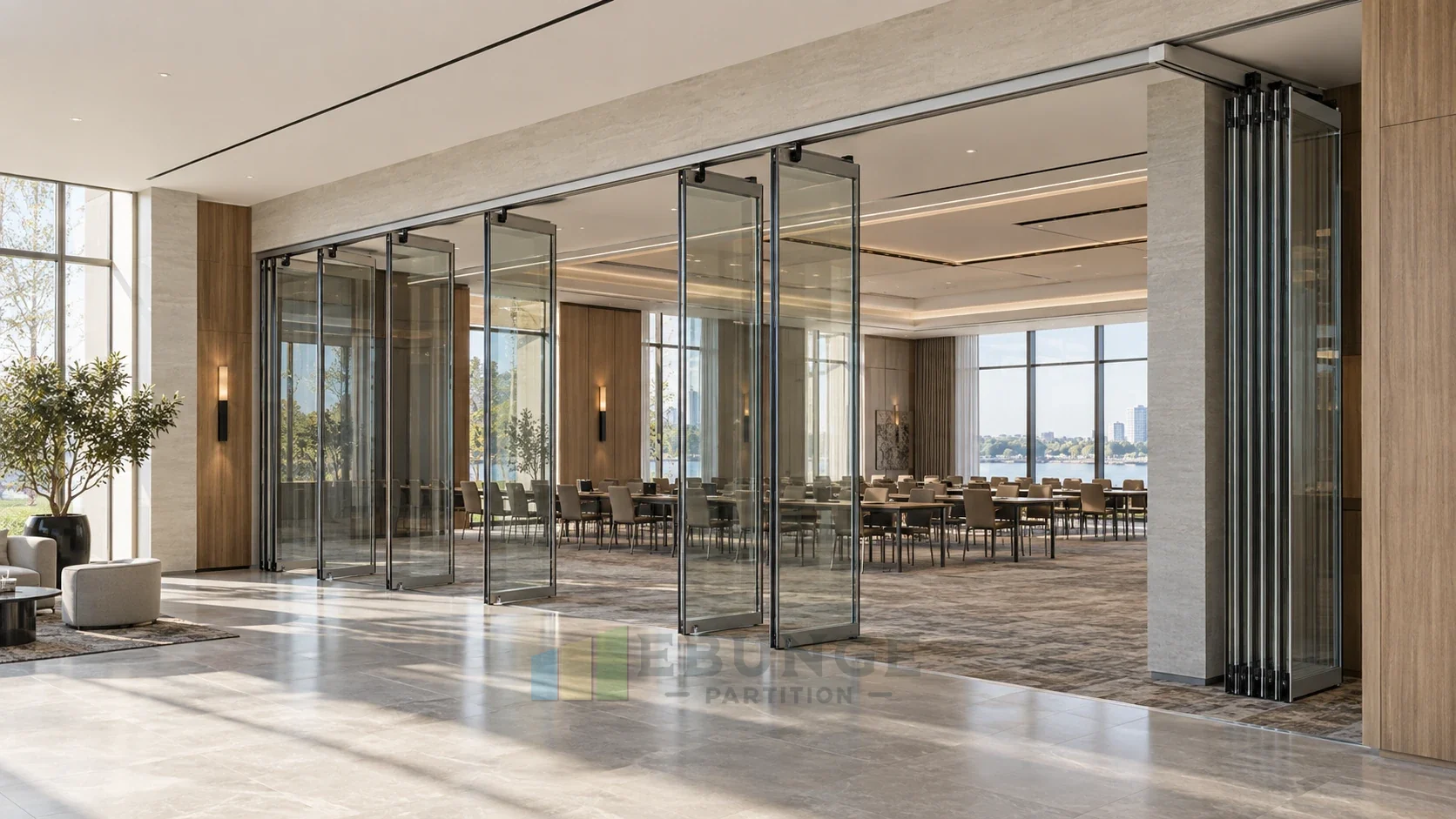
This boundary is especially important for overseas projects where multiple reviewers may interpret the same document differently. A short evidence note at the front of the package helps align expectations before the handover meeting.
Common Coordination Gaps to Resolve Early
Most handover friction comes from assumptions rather than missing files. A route may be drawn but not coordinated with a ceiling feature. A finish may be selected but not approved for the intended area. A pass-door may be requested after the layout is frozen. Addressing these gaps early reduces the risk of late changes.
Use the framed movable glass partition product context as a reference for the system type, then compare it with the project layout. The product overview and solution pages can help teams frame questions before requesting project-specific confirmation.
FAQ: Framed Movable Glass Wall Handover Evidence
What is framed movable glass wall handover evidence?
It is a structured record of the approved layout, routes, finishes, interfaces and open items for a framed movable glass wall. It documents what was reviewed and what still requires project-specific confirmation.
Does handover evidence prove acoustic performance?
No. Final acoustic behavior depends on the complete project condition and must be confirmed separately.
Why is the stacking position part of the evidence package?
The stacking position is where panels park when the opening is clear. It affects adjacent uses, circulation and coordination, so it should be shown on the approved layout and reviewed with the project team.
Can the handover file include finish samples?
Yes. Finish records can reference approved categories such as laminate, melamine, fabric, leather, glass or other approved surfaces. A finish record does not imply cleaning, durability or performance results.
What should be done with open items?
List each open item with a description, responsible party, date and next review step.
How should pass-door requirements be documented?
Record the agreed location and related drawing revision if a pass-door is required. Pass-door requirements can be discussed as part of project documentation, but final details depend on the layout and project confirmation.
For the next planning step, review the related EBUNGE guide, review the related EBUNGE guide and confirm the opening, ceiling condition, layout, finish direction and acoustic requirement for the project.
Conclusion: Keep Handover Evidence Traceable and Honest
A well-structured handover package for a framed movable glass wall does not need to claim more than the project can support. It needs to show the approved layout, the continuous overhead route, the planned stacking position, the finish selections and the open items. It should clearly separate confirmed coordination from project-specific requirements such as support, acoustic and dimensional confirmation.
For teams preparing a submission, the most useful next step is to review the project drawings against the maintained product context and prepare a focused question list. You can contact EBUNGE to discuss project documentation, pass-door requirements and the information needed for your specific handover package.