

Audit a Movable Glass Partition Tender for Scope Gaps
Quick answer: movable glass partition tender
Review focus: movable glass partition tender.
A movable glass partition tender scope audit is a structured review of what the tender documents actually require, what they leave undefined, and which items must be confirmed against project drawings before award. It is not a price comparison and not a performance promise. The goal is to expose gaps early, so contractors, architects, designers and owners can coordinate a complete scope instead of discovering omissions after mobilization.
This guide uses maintained EBUNGE product facts and clear evidence boundaries. Every recommendation below should be checked against your own layout, support conditions and project-specific requirements.
Why a Scope Audit Matters Before Award
Project review term: movable glass partition tender.
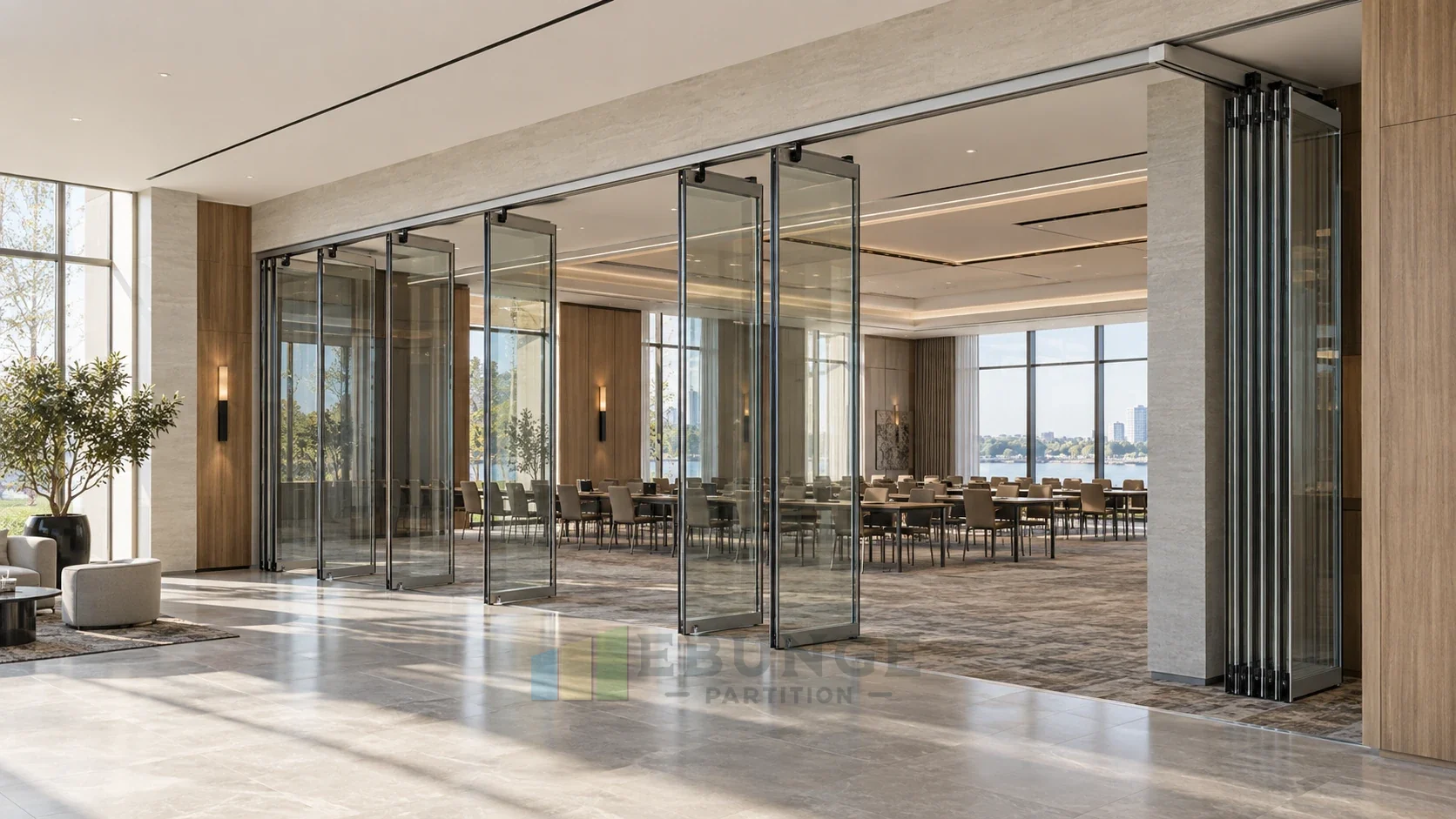
Movable glass partitions are top-hung systems. Panels are individually movable, suspended from a top track, cross the opening without a floor track, and park at a planned stacking position. That operating concept creates interfaces that a generic tender line item may not capture: overhead support, route continuity, parking space, finish coordination and documentation.
A scope audit does not replace engineering review. It identifies where the tender is silent, ambiguous or internally inconsistent, so the right questions reach the right reviewers before commitments are made.
Start With the Movement Route, Not the Panel
Coordination scope: movable glass partition tender.
Many tender gaps appear in the route rather than the product. Straight, turning and stacking routes should be reviewed from the layout. If the tender shows a partition line but no parking position, the scope is incomplete.
Route questions to ask
- Where does each panel travel when the opening is cleared?
- Is the overhead route continuous and connected for the full movement path?
- Where do panels park, and does that position conflict with doors, services or finishes?
- Does the layout show turning or junction conditions, or only a straight run?
The exact route, junction arrangement, continuous overhead path and parking position must be confirmed from the coordinated project drawings. Every proposed movement path requires a continuous connected overhead route and project-specific support review.
Audit the Overhead Support and Interface Scope
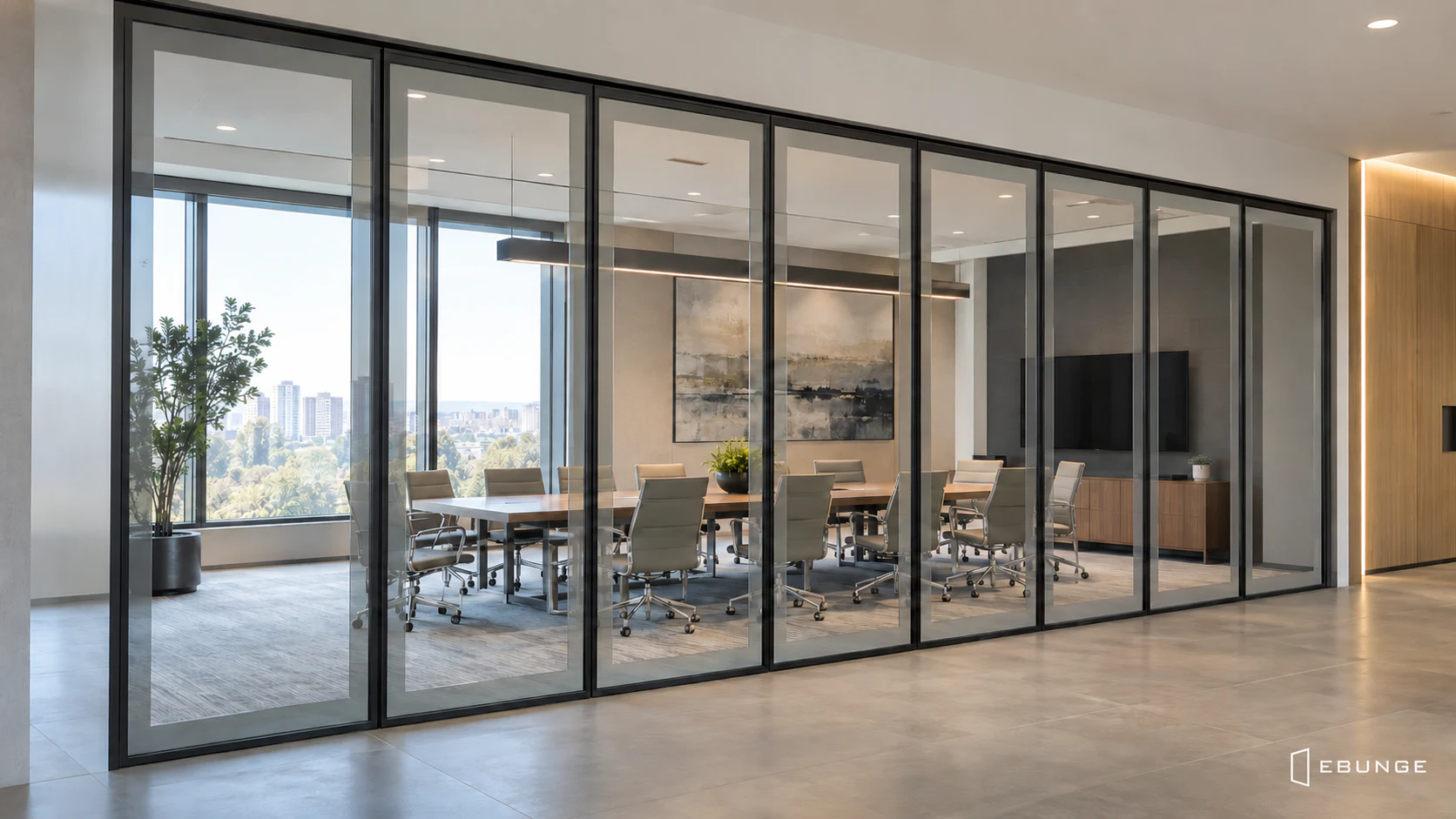
The suitability of each route and parking arrangement depends on the approved layout, circulation, ceiling interfaces and operating sequence. Tender documents should state who is responsible for the supporting structure, who confirms its adequacy, and how the partition interface is coordinated with ceilings, soffits and adjacent walls.
Interface items often missing from tenders
- Supporting structure responsibility and review route.
- Ceiling and soffit coordination along the track line.
- Fire, smoke or acoustic interface treatment, if required by the project.
- Access for installation and future adjustment.
These items require project-specific confirmation. A tender that lists panels without interface responsibility is a scope gap, not a complete package.
Check Finish, Glass and Pass-Door Scope
Confirmed finish options include laminate, melamine, fabric, leather, glass and other approved surfaces. The tender should state which finishes apply, where, and how they coordinate with the surrounding interior.
Pass-door requirements and project documentation can be discussed with the supplier. If the tender includes a pass door, the audit should confirm whether it is described as part of the movable system or as a separate door package.
Finish and documentation checklist
| Tender item | What to verify |
|---|---|
| Finish schedule | Which surfaces are specified, and for which panels |
| Glass type | Whether the tender states a glass build-up or leaves it open |
| Pass door | Whether it is included, and who supplies the hardware |
| Documentation | Which drawings, schedules and approvals are required |
Those attributes require separate project-specific confirmation.
Separate Acoustic Concepts From Acoustic Claims
A tender may reference an acoustic target, but the audit should ask how that target is to be demonstrated and by whom.
Evidence note: a stated acoustic rating in a tender is a requirement, not proof. Confirm the test basis, the assembly tested and the site conditions with the responsible parties before relying on it.
Seals and acoustic concepts can be explained generically, but the tender should not be treated as evidence of a specific site result. Confirm project-specific acoustic requirements with qualified reviewers.
Review Commercial and Responsibility Boundaries
Scope gaps often sit between packages. The audit should identify who supplies, who installs, who adjusts and who documents each element.
Responsibility questions for the tender
- Who confirms the supporting structure is adequate for the top-hung system?
- Who supplies and installs the top track and any associated interface items?
- Who is responsible for parking area preparation and protection?
- Who provides as-built drawings, schedules and handover documentation?
- Who coordinates with other trades at ceilings, walls and finishes?
If the answer is unclear for any item, mark it as an open scope gap and route it to the appropriate reviewer.
Use a Repeatable Audit Process
A repeatable process keeps the review consistent across bidders and revisions.
- Collect the tender drawings, specification and finish schedule.
- Mark every partition line, opening, route and parking position.
- List every interface with structure, ceiling, wall and adjacent finishes.
- Identify items that are undefined, duplicated or assigned to no party.
- Record each gap with a question and a required confirmation.
- Issue clarifications before award and record the responses.
This process does not require performance assumptions. It requires disciplined reading of the documents and a clear route for project-specific confirmation.
Frequently Asked Questions
What is a movable glass partition tender scope audit?
It is a structured review of the tender documents to find undefined, duplicated or missing scope items before award. It focuses on drawings, routes, interfaces, finishes and documentation rather than price alone.
Does a movable glass partition need a floor track?
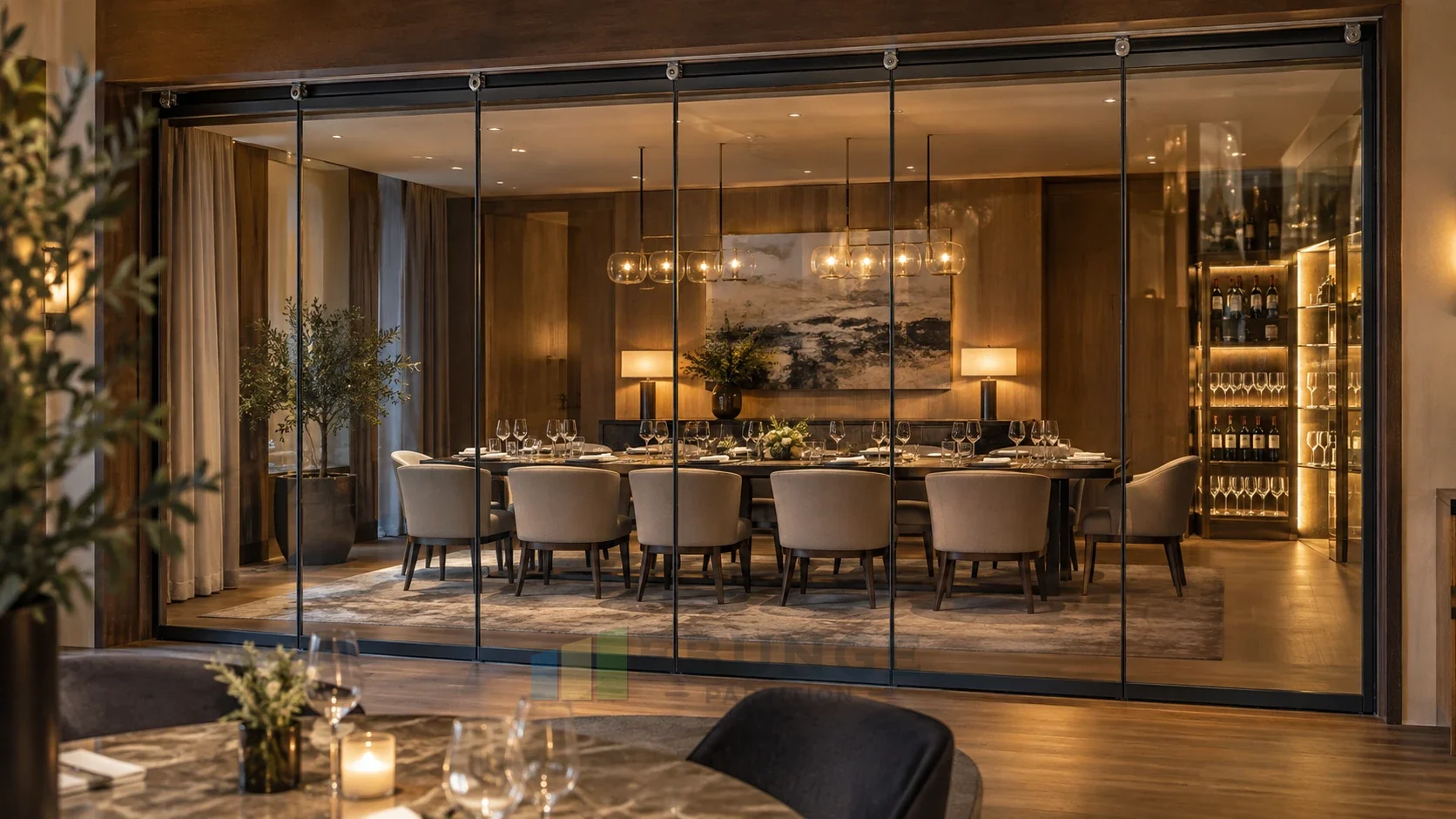
EBUNGE movable partition panels are top-hung and move without a continuous floor running track or floor hardware along the partition line.
Can panels move across any opening?
No. Every proposed movement path requires a continuous connected overhead route and project-specific support review. The exact route, junction arrangement, continuous overhead path and parking position must be confirmed from the coordinated project drawings.
How should acoustic ratings be treated in a tender?
Provide the current layout, opening dimensions, ceiling information, intended room use, and relevant project drawings for review. The exact overhead route and support arrangement must be confirmed by the responsible project team from coordinated drawings.
Which finishes can be specified?
Confirmed finish options include laminate, melamine, fabric, leather, glass and other approved surfaces. The tender should state which finishes apply and where.
What documentation should the tender require?
Project documentation requirements can be discussed with the supplier. Typical items include drawings, schedules and handover information, but the exact list depends on the project.
Conclusion and Next Step
A movable glass partition tender scope audit is most useful when it stays evidence-bounded. Confirm the movement route, overhead support, parking position, finishes, pass-door scope and documentation responsibilities.
To discuss your project drawings and tender documentation, contact EBUNGE. You can also review custom movable glass partition systems, browse the product range, explore space solutions, see application examples, or use the engineering resources for coordination support.