

Detect Unbalanced Pricing in Movable Glass Partition Tenders
Quick project answer
A movable glass partition unbalanced pricing review helps project teams see where a tender price may be shifted rather than earned. The suitability of each route and parking arrangement depends on the approved layout, circulation, ceiling interfaces and operating sequence. For overseas contractors, architects, interior designers, owners and renovation teams, the goal is not to guess a fair number. The goal is to compare bids on the same defined scope, using drawings, schedules and written clarifications. This article sets out a review framework that stays inside confirmed product facts and project-specific confirmation.
What Unbalanced Pricing Looks Like in a Movable Glass Partition Tender
Unbalanced pricing usually shows up as a low headline total paired with high rates in items that are likely to change. In movable glass partition tenders, those items often sit around interfaces, finishes, pass doors, stacking arrangements and coordination. A bidder may price the visible panels attractively while leaving route preparation, support coordination or finish upgrades thinly covered.
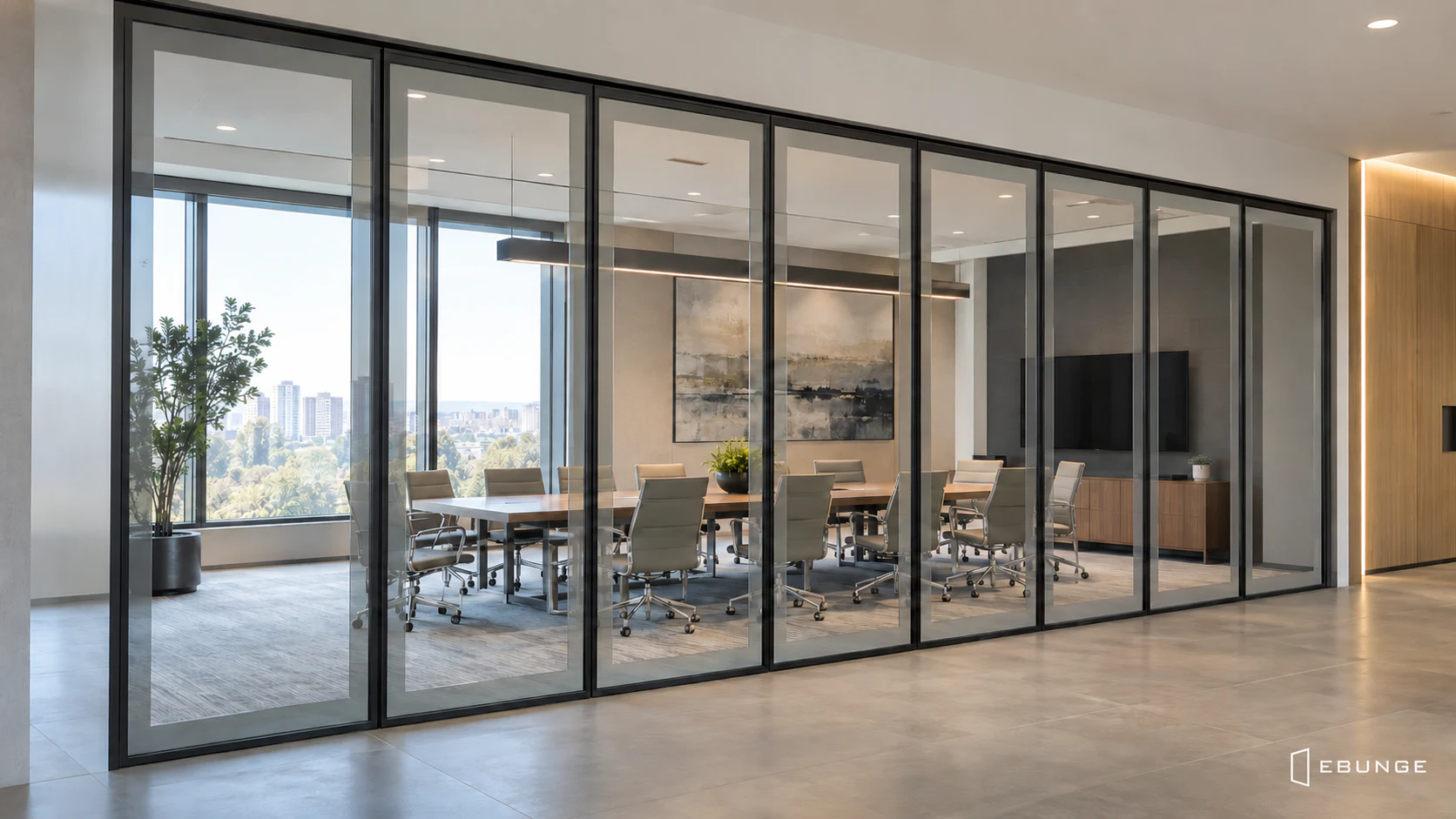
Because EBUNGE panels are top-hung and move without a continuous floor running track along the partition line, the tender should describe the overhead route, turning points and parking position clearly. If those items are vague, a reviewer cannot tell whether a low rate includes the real work or simply defers it.
Start With the Drawing Set, Not the Price Column
Before comparing totals, confirm that every bidder is pricing the same layout. The exact route, junction arrangement, continuous overhead path and parking position must be confirmed from the coordinated project drawings. Where the route changes direction, the overhead path must remain continuous and supported; that is a project-specific engineering question, not a generic assumption.
Ask each bidder to confirm which drawings they used and which revisions apply. A price based on an older layout is not comparable. This step alone removes many false comparisons in a movable glass partition unbalanced pricing review.
A Six-Step Review Process for Tender Teams
- Freeze the scope baseline. Issue one drawing set, one finish schedule and one clarification log to all bidders.
- Map the movement route. Mark straight runs, turning sections and the parking zone on the plan.
- List interface items. Identify what the partition package includes and what other trades provide.
- Normalize the line items. Ask bidders to use the same item descriptions and units.
- Flag outliers. Compare each line item against the median, not only the total.
- Request written clarification. Ask bidders to explain any rate that differs sharply from the group.
This process does not produce a performance conclusion. It produces a clearer question list for the next round.
Line-Item Comparison Table for Bid Review
| Review area | What to compare | Evidence needed |
|---|---|---|
| Panel and finish scope | Same panel quantities, finish categories and edge conditions | Finish schedule and approved surface list |
| Movement route | Straight, turning and stacking paths shown on plan | Coordinated layout drawing |
| Pass doors | Same door positions, sizes and swing or slide direction | Door schedule and project confirmation |
| Parking position | Same stacking location and clearance zone | Layout drawing and project review |
| Documentation | Same submittal, sample and approval scope | Project documentation list |
Use the table to expose gaps, not to rank bidders on price alone. A missing row is a risk signal.
Finish and Interface Items That Commonly Distort Bids
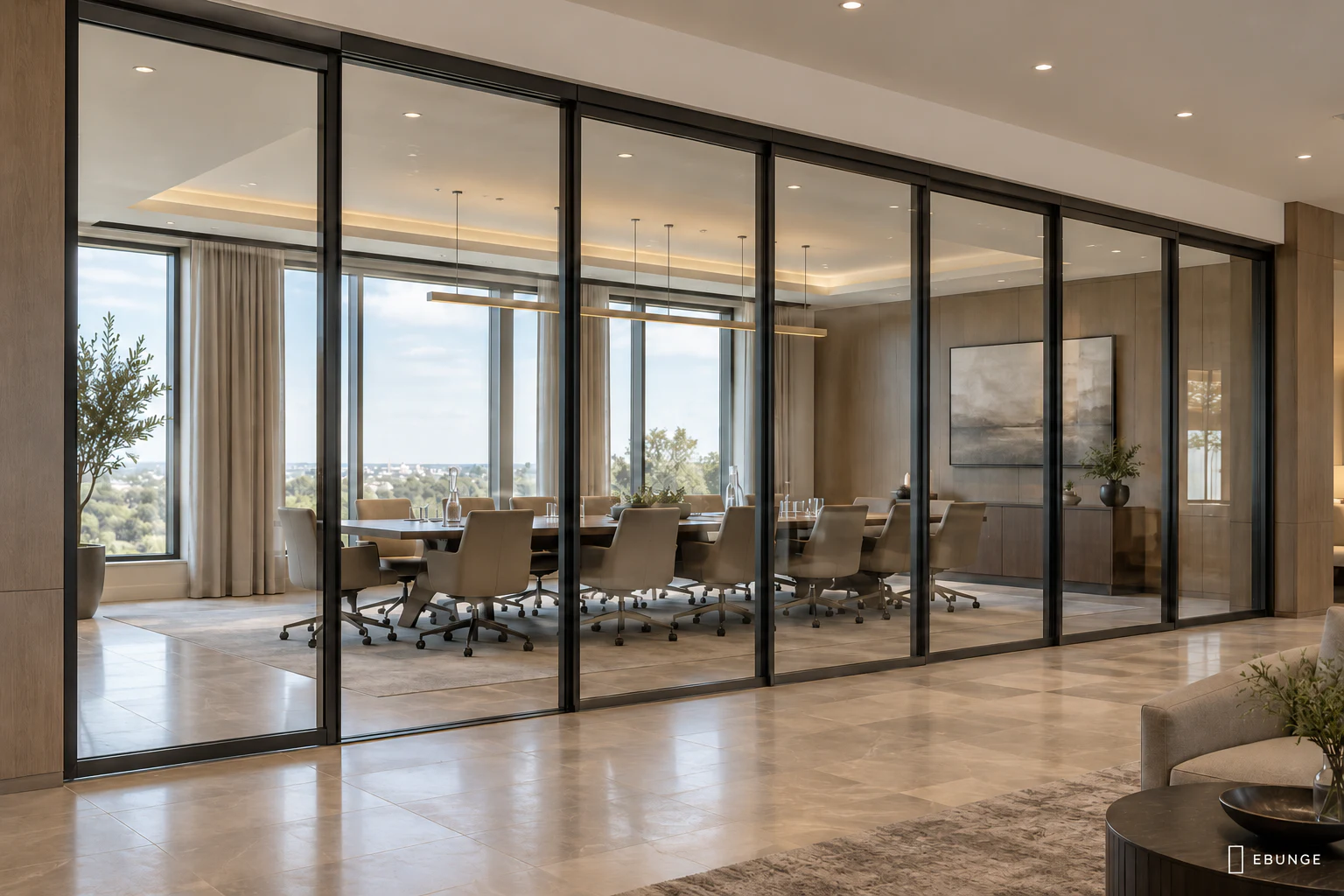
Confirmed finish options include laminate, melamine, fabric, leather, glass and other approved surfaces. If one bidder assumes a standard finish and another prices a premium surface, the totals are not comparable. The same applies to pass doors, which should be described in the tender and confirmed against the project layout.
Interface items are another common source of imbalance. These are project-specific requirements and should be confirmed with qualified local professionals.
Acoustic and Performance Language: Keep It Conceptual
A tender may reference an acoustic target, but the achieved result depends on the full assembly, the surrounding construction and the installation condition.
Instead, ask for the acoustic requirement to be stated in the specification and confirmed through the project documentation route. EBUNGE can discuss pass-door requirements and project documentation, but performance claims must match the confirmed project scope.
Evidence Notes for Reviewers
Visible references can support layout discussion but do not verify hidden construction or performance. Those items require separate project-specific confirmation.
Keep a short evidence log beside the tender comparison. Record what each bidder has confirmed in writing, what remains open, and which items depend on the coordinated layout. This prevents a later dispute about assumptions.
Frequently Asked Questions
What is unbalanced pricing in a movable glass partition tender?
It is a pricing pattern where some line items are priced low and others are priced high, often because scope is unclear or likely to change. The total may look competitive while the risk sits in specific items.
Do I need a floor track to compare movable glass partition bids?
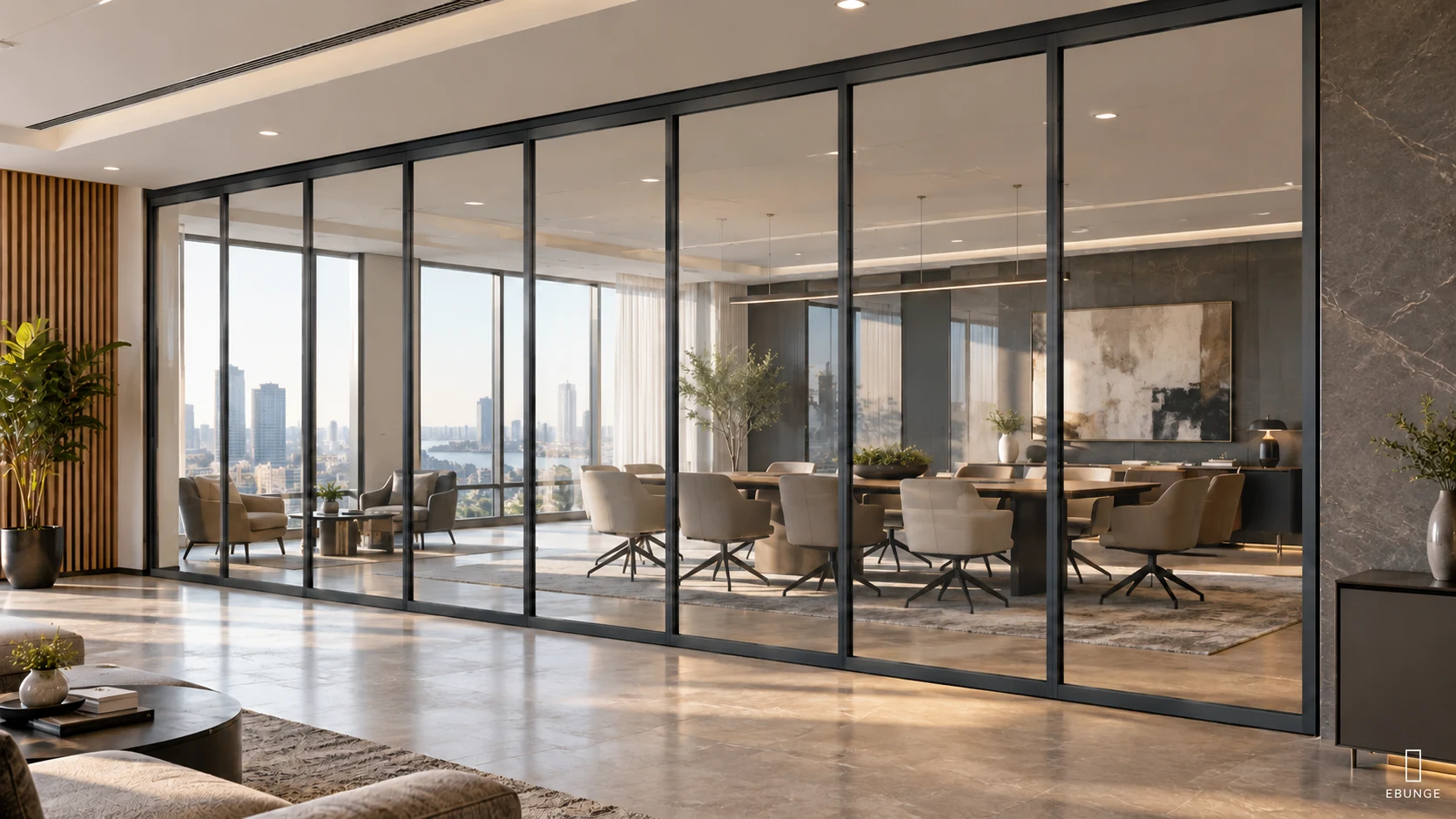
No. EBUNGE movable partition panels are top-hung and move without a continuous floor running track along the partition line. The tender should focus on the overhead route, turning points and parking position.
Which drawings should bidders price from?
All bidders should price from the same coordinated layout showing the opening, straight and turning routes, and the planned stacking position. Confirm the drawing revision in writing.
Can I compare acoustic ratings between bids?
Only if the project specification defines the acoustic requirement and the supporting documentation is provided.
How should pass doors be handled in the tender?
Pass-door requirements should be described in the tender and confirmed against the project layout. Ask each bidder to price the same door positions and operating direction.
What should I do if one bid is much lower than the others?
Request a written clarification that maps the low bid to the same scope baseline. Check whether route preparation, finish scope, pass doors or documentation are excluded or assumed.
Conclusion and Next Step
A movable glass partition unbalanced pricing review is a scope discipline exercise. Freeze the drawings, normalize the line items, compare each area, and ask for written clarification where rates diverge. Stay within confirmed product facts and project-specific confirmation, and avoid treating any single number as proof of performance.
To discuss your project layout, finish options, pass-door requirements or documentation needs, contact EBUNGE. You can also review the custom movable glass partition systems page, browse products, explore solutions, check applications, or use the engineering resources for drawing coordination.