
A semi-automatic glass operable wall combines manual panel movement with specific assisted functions. It should not be described as fully automatic unless the supplied system and approved controls genuinely provide that operation.
The project must identify exactly which action is assisted, how it is controlled and what services are required. Functions, controls and safety interfaces remain subject to the verified EBUNGE system specification.
In a semi-automatic system, the core panel movement remains a manual, user-controlled action: panels travel along the track by hand in the planned sequence. The system is not fully automatic unless the supplied specification genuinely provides that operation. Manual handling, parking and opening steps stay within the operator’s control, which keeps the daily use simple and predictable.
Specific actions in the operating sequence may be assisted for the supplied system, such as supporting the movement or sealing of selected panels. Which action is assisted, how it is controlled and which services are required are defined in the verified EBUNGE system specification. Functions, controls and safety interfaces are not described generically; they are confirmed per project against approved first-party technical documents.
Assisted functions can make large or frequently used panels easier to handle, reduce physical effort for daily users, and support consistent operation in busy venues. They add coordination requirements for power, controls and maintenance.
The value should be compared with the project’s panel sizes, usage frequency and operating budget before specification.
Assisted operation is typically reviewed for large conference and banquet panels, panels used several times a day, and spaces where users expect a smoother operating sequence. It is not required for every project. Final suitability follows the panel geometry and the verified system range for the specific project.
Manual operation means panels are moved by hand in a defined sequence. A semi-automatic system keeps core movement manual and assists specific actions where the verified EBUNGE system specification provides them.
| Manual | Semi-Automatic (Assisted) | |
|---|---|---|
| Panel movement | Hand-operated movement in the planned sequence | Core movement remains manual; specific actions may be assisted |
| Sealing | Manual sealing where configured | Sealing of selected panels may be assisted where configured |
| Power & control | No electrical coordination required | Project-specific power and control interfaces coordinated with building services |
| Complexity & coordination | Lowest complexity; standard review path | Higher review effort; controls, safety interfaces and maintenance coordinated |
| Best fit | Most standard panels and daily use patterns | Large or high-use panels where assisted handling is justified |
Manual: hand-operated movement, no electrical coordination, lowest complexity, suitable for most standard panels. Semi-automatic: assisted actions in the sequence, electrical and control coordination required, higher project review effort, selected for large or high-use panels. See Manual vs Semi-Automatic Operable Walls for the full comparison.
The wall changes from closed to open and back in a planned sequence. Which step is assisted and how the operator controls it are defined in the verified project specification.
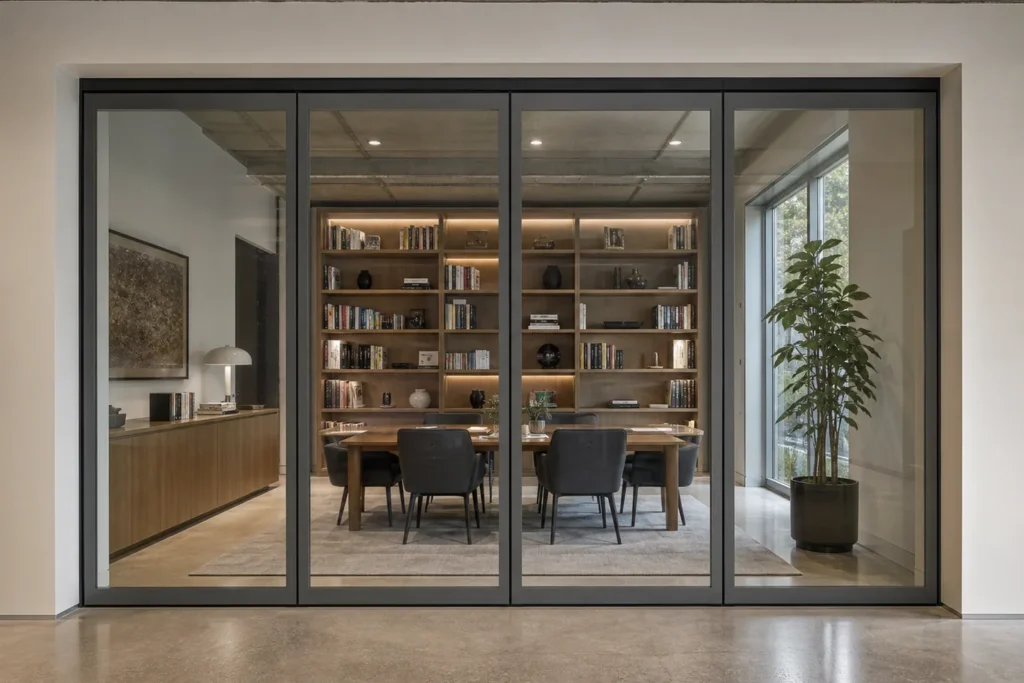
Release seals and prepare the panels for travel.
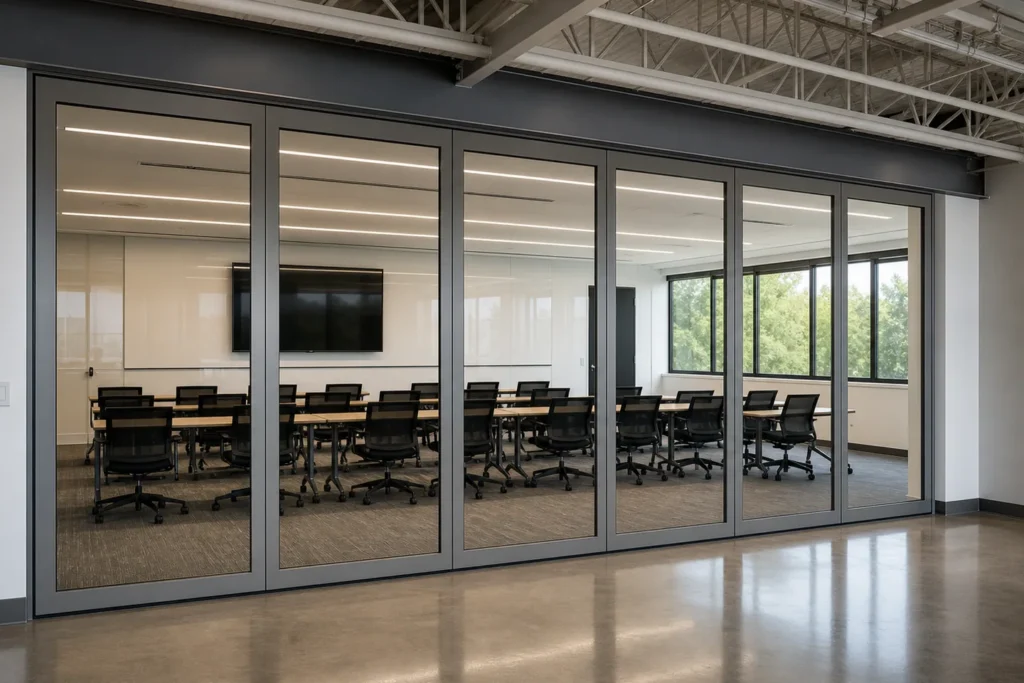
Panels travel along the track in the planned order.
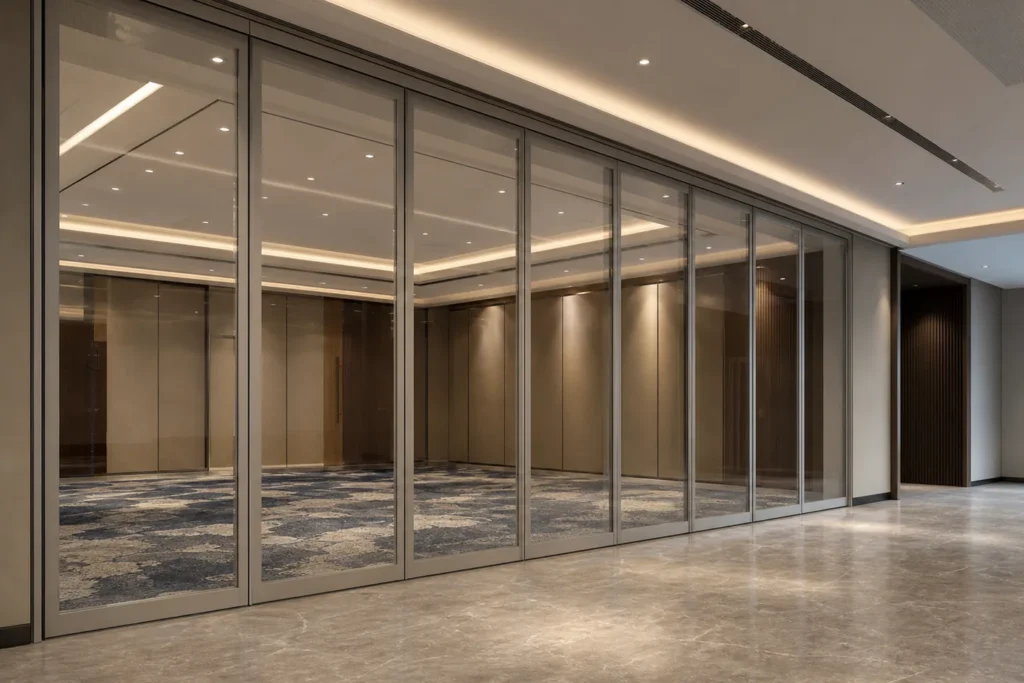
Panels stack in the planned parking zone.
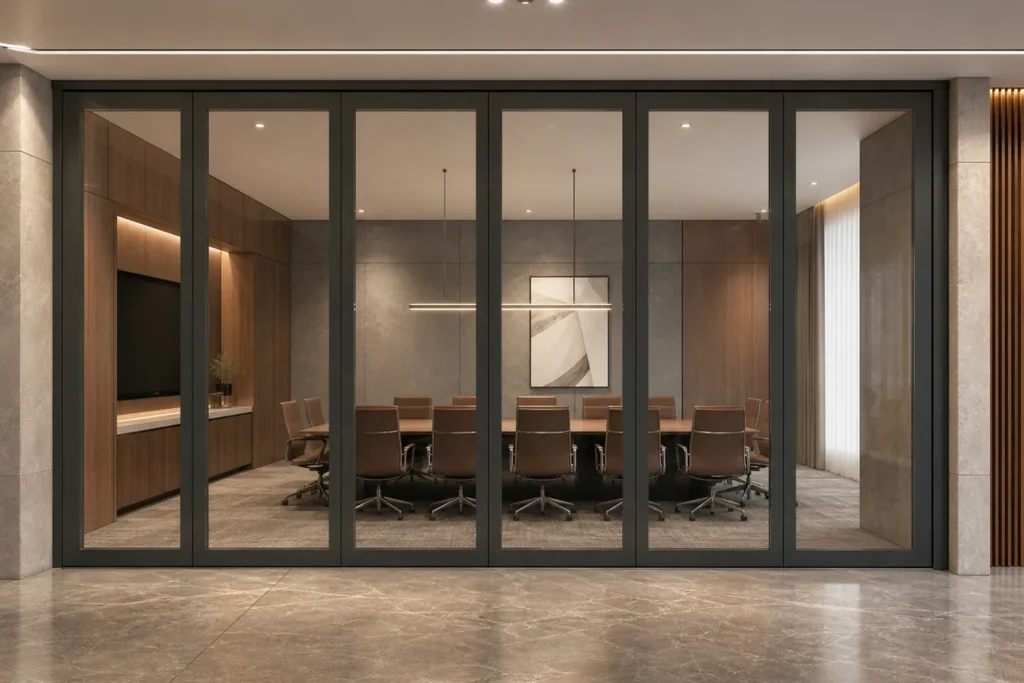
Panels re-close and seals are reset to the closed position.
The operating sequence describes how the wall changes from closed to open and back: releasing seals, moving panels, parking, re-closing and re-sealing. In a semi-automatic system, the verified specification defines which of these steps is assisted and how the operator controls it. The exact sequence is documented in the approved system specification and shop drawings for each project.
Assisted functions require electrical supply and control interfaces that are coordinated with the building services early in design. Panel manufacturers do not assume standard power ratings; the requirements come from the verified system specification for the selected configuration.
Confirm available power, control location and safety interfaces with the project team before finalising the system.
Send the opening dimensions, panel sizes and weights after review, drawings, ceiling and structural details, the intended operating sequence, control preferences, available power services, usage frequency and programme. EBUNGE then confirms whether assisted operation is feasible and how it would be configured. Project-specific configuration is available upon drawing review.
Consider operator training, access to controls, parking sequence, emergency procedures and maintenance. The daily user journey should be reviewed before finalising the system.
Does semi-automatic mean the panels move by themselves? No. It means a verified part of the operating sequence is assisted; the system is not described as fully automatic.
Is electrical work included? Electrical supply and control interfaces are coordinated with the building services and confirmed in the approved specification; EBUNGE does not supply installation labour.
Can a manual system be upgraded later? Upgrades depend on the panel and track construction and are reviewed per project against the verified system range.
Send your opening dimensions, drawings, application, preferred glass or frame, operation mode, delivery location and required schedule.