

Build a Snag List Before Handover of a Framed Glass Wall
Quick project answer
Review focus: framed movable glass wall snag list.
A framed movable glass wall snag list is not a generic punch list copied from another trade. It is a project-specific record of visible conditions, coordinated movement routes and documentation gaps that must be closed before handover. For overseas contractors, architects, interior designers and owners, the snag list should reflect what can be seen and verified on site, not assumed performance. The suitability of each route and parking arrangement depends on the approved layout, circulation, ceiling interfaces and operating sequence.
Start With the Approved Layout and Movement Routes
Project review term: framed movable glass wall snag list.
Before writing any snag item, confirm the approved layout drawing. EBUNGE movable partition panels are individually movable, suspended from a top track, cross the opening without a floor track, and park at a planned stacking position. Straight, turning and stacking routes are reviewed from the layout. Your snag list should therefore begin with route verification rather than finish appearance.
Route checks to record
- Does the overhead route remain continuous and connected across every proposed movement path?
- Are turning points and stacking positions shown on the coordinated layout?
- Is the parking area clear of fixed obstructions that would block panel movement?
- Are support locations identified for project-specific review?
Do not infer support capacity, load values or engineering outcomes from a drawing alone.
Build the Snag List in a Defined Sequence
Coordination scope: framed movable glass wall snag list.
A repeatable sequence keeps the handover inspection focused and reduces the risk of missing interface items. The following numbered process can be adapted to any venue, from a hotel meeting room to a school hall or office renovation.
- Confirm scope and drawings. Collect the latest approved layout, elevation and interface drawings.
- Walk the movement route. Observe the full travel path, including turns and parking.
- Inspect visible panel and frame condition. Record scratches, alignment or finish concerns.
- Check finish consistency. Compare installed surfaces against the approved finish schedule.
- Review pass-door requirements. Note any agreed pass-door location or operation for discussion.
- List documentation gaps. Identify missing approvals, method statements or coordination notes.
- Assign responsibility and target date. Keep each item traceable to a responsible party.
What Belongs on a Framed Movable Glass Wall Snag List
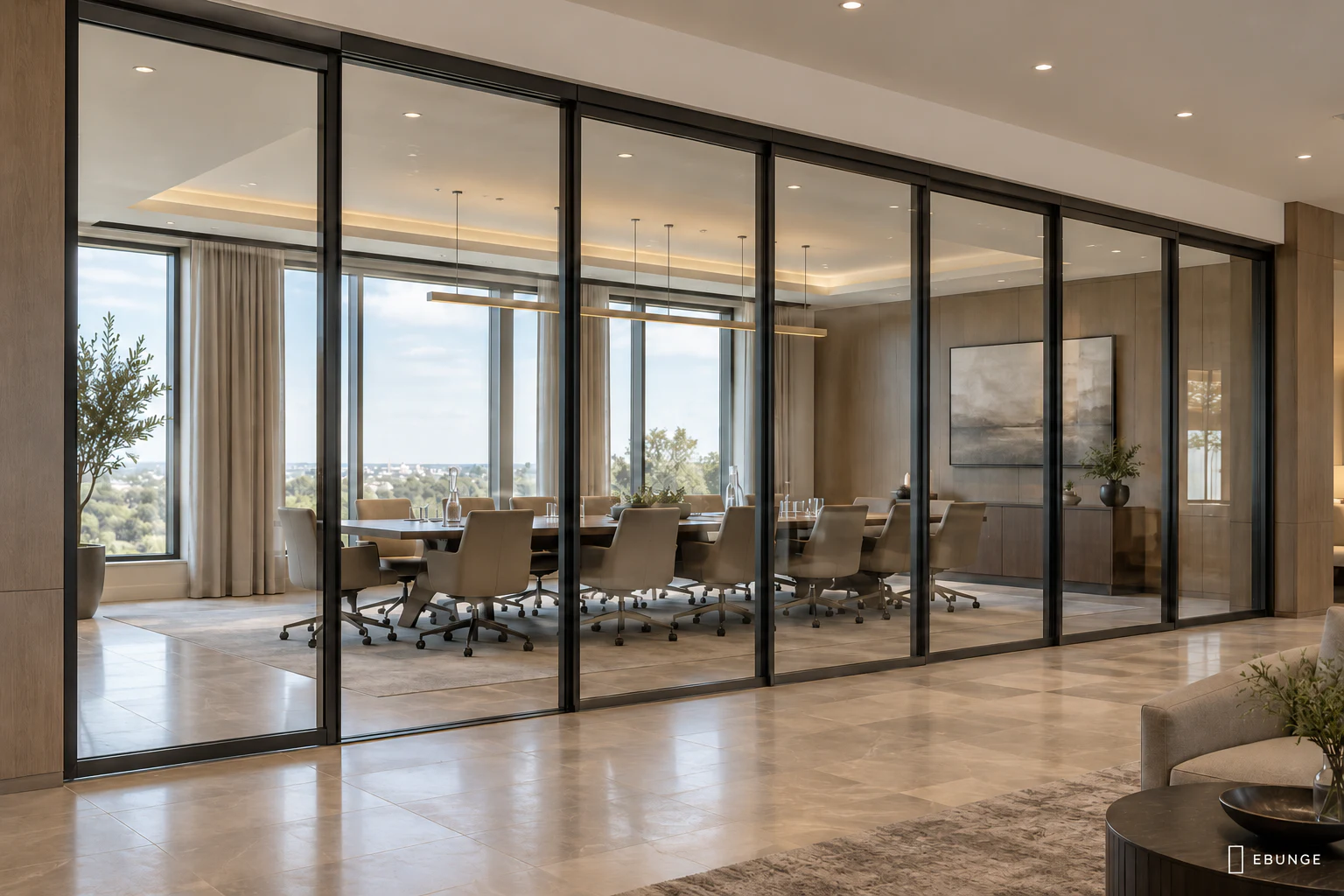
Checklist focus: framed movable glass wall snag list.
Not every observation is a snag. Some are coordination questions, and some require project-specific evidence before they can be closed. Separating these categories prevents the list from becoming a mix of defects, preferences and unverified assumptions.
| Category | Example item | Evidence needed |
|---|---|---|
| Visible condition | Frame or glass surface marks | Site photograph and agreed finish reference |
| Movement route | Turning or stacking clearance | Approved layout and coordinated route review |
| Finish | Laminate, melamine, fabric, leather or glass surface | Approved finish schedule and sample reference |
| Documentation | Missing interface or approval record | Project document register |
| Performance | Acoustic or structural expectation | Project-specific confirmation, not visual inference |
Use this table as a sorting tool, not as a substitute for project-specific requirements. Confirm support, acoustic and dimensional requirements with the responsible parties before closing any performance-related item.
Finish and Interface Checks That Need Clear Evidence
Confirmed finish options include laminate, melamine, fabric, leather, glass and other approved surfaces. A snag list should reference the approved finish schedule rather than a personal impression of colour or texture. If a finish is not listed in the approved schedule, record it as a query, not a defect.

Interface items to coordinate
- Junctions between the movable wall and adjacent fixed construction.
- Pass-door requirements and how they are documented for the project.
- Stacking area boundaries and protection of adjacent finishes.
- Any visible seal or acoustic concept that the project team expects to review.
Visible references can support layout discussion but do not verify hidden construction or performance.
Documentation and Evidence Boundaries
A strong snag list distinguishes between what is visible and what is claimed. Visible evidence includes surface condition, alignment, finish matching and route clearance.
If the evidence is not in the project file, keep the item open for confirmation.
Project documentation can be discussed with the supplier or project team. Use the engineering resources section to organise submittals, and refer to the framed movable glass partition page for maintained product context. For broader system options, see products and solutions.
Handover Documentation Coordination
Handover documentation coordination is where the snag list becomes a management tool. Each item should have a clear owner, a status and a closure route. Avoid closing an item simply because a verbal assurance was given; record the evidence that supports closure.

Suggested status labels
- Open: observed and not yet resolved.
- Query: requires clarification or project-specific confirmation.
- Ready for review: corrective action reported, awaiting inspection.
- Closed: verified against the agreed reference or document.
Keep the list version-controlled. When the layout changes, revisit route and parking items. When the finish schedule changes, revisit surface items. This prevents the snag list from becoming outdated before handover.
Frequently Asked Questions
What is a framed movable glass wall snag list?
It is a structured record of visible conditions, movement route checks, finish items and documentation gaps that must be reviewed before handover. It is not a performance certificate.
Should the snag list include acoustic performance?
Acoustic expectations should be listed as project-specific confirmation items.
How do I check the movement route?
Review the approved layout for straight, turning and stacking routes. Confirm that the overhead route is continuous and that the parking position is coordinated with the project design.
Can pass-door requirements be included?
Yes. Pass-door requirements and project documentation can be discussed with the project team and recorded as coordination items on the snag list.
Which finishes should be verified?
Verify installed surfaces against the approved finish schedule. Confirmed options include laminate, melamine, fabric, leather, glass and other approved surfaces.
When should the snag list be started?
Start before handover, once the approved layout and finish schedule are available. Early review gives the project team time to resolve route, interface and documentation items.
Conclusion and Next Steps
Confirm project-specific support, acoustic and dimensional requirements with the responsible parties. Use the approved layout, finish schedule and documentation register as your references, and keep performance claims separate from visible observations.
For project-specific coordination, visit the applications section or contact the EBUNGE team to discuss your layout, finishes and handover documentation requirements.