

What a Tender Addendum Changes in a Framed Movable Glass Wall Bid
Quick answer: framed movable glass wall
Review focus: framed movable glass wall.
A framed movable glass wall tender addendum is rarely just a price adjustment. It changes the bid scope, the drawing set, the finish schedule and the evidence the contractor must provide. For overseas project teams, the addendum is often the moment when a generic product line becomes a coordinated package. The goal is not to make the bid longer. It is to make the bid comparable, buildable and reviewable against the actual opening.
This guide explains what an addendum can change, which items need project-specific confirmation and how to keep the evaluation fair. It uses maintained EBUNGE product facts and avoids unsupported performance or commercial conclusions.
Why an Addendum Appears After the First Bid
First-round bids often rely on a simplified layout. The addendum usually arrives when the design team has a clearer view of the opening, the parking position or the finish direction. It may also follow a clarification meeting where the contractor asked how the panels move, where they stack and how the routes are reviewed.
An addendum can change the scope without changing the product family. The same framed movable glass wall may need a different stacking arrangement, a revised pass-door requirement or a more detailed finish schedule. Each change should be traceable to a drawing or a written instruction, not to an assumption.
What the addendum should clarify
- The exact opening and the planned stacking position.
- Whether the route is straight, turning or a combination.
- How the panels park and whether the parking area is coordinated with other trades.
- Which finish surfaces are approved and where they appear.
- Whether a pass door is required and how it is documented.
Scope Changes That Affect the Bid
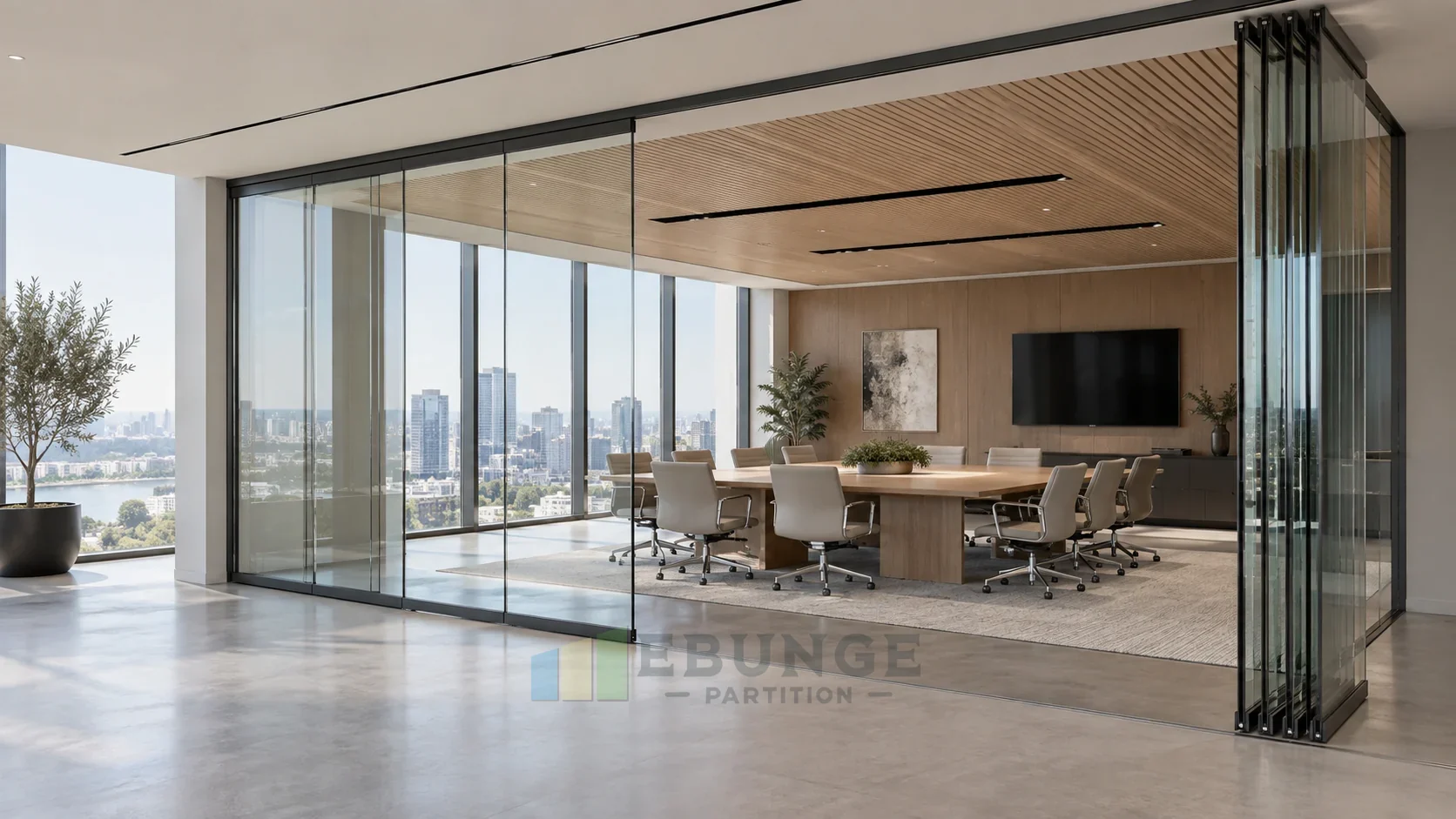
A tender addendum can shift the bid from a panel count to a movement study. Because panels are individually movable and suspended from a top track, the bid must reflect the overhead route and the parking logic. The exact route, junction arrangement, continuous overhead path and parking position must be confirmed from the coordinated project drawings.
It can also change the finish scope. Confirmed finish options include laminate, melamine, fabric, leather, glass and other approved surfaces. If the addendum introduces a new finish or a different distribution of finishes, the bidder needs to update the schedule rather than carry the original assumption forward.
Pass doors and documentation
Pass-door requirements and project documentation can be discussed as part of the addendum. A pass door may change the panel sequence, the frame layout or the way the wall closes. The bid should state what is included and what still requires confirmation. This is not a performance claim; it is a scope statement.
Drawing Review and Route Coordination
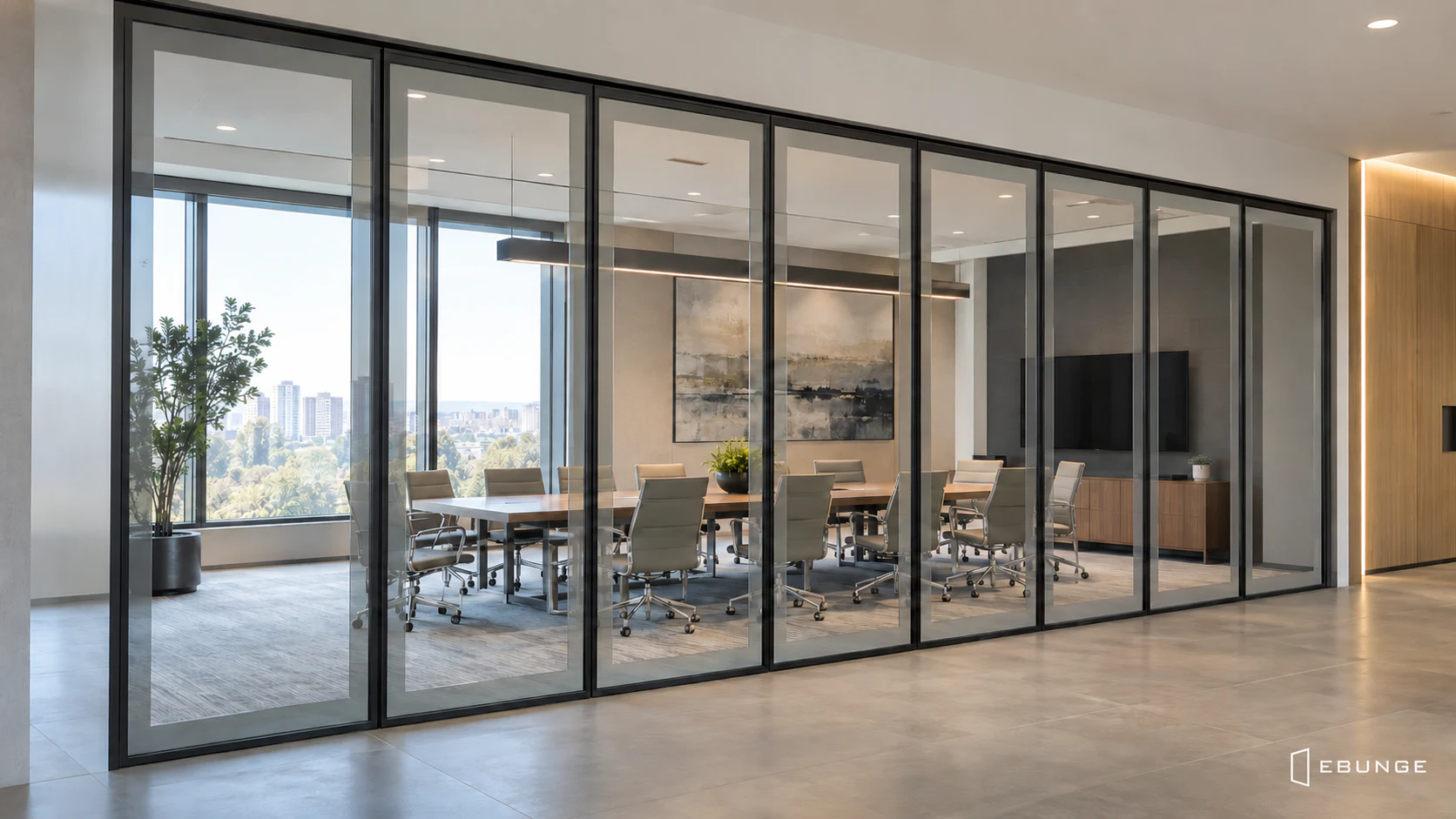
Straight, turning and stacking routes are reviewed from the layout. The addendum should include the latest plan, elevation and any reflected ceiling information that affects the top track. If the route is straight, the review still needs to confirm the overhead support and the parking zone.
Do not infer hidden engineering from a drawing. The suitability of each route and parking arrangement depends on the approved layout, circulation, ceiling interfaces and operating sequence. The addendum should identify what the bidder must verify and what the project team must confirm.
Evidence note
Visible finishes, photographs and drawings do not prove acoustic, fire, durability, load or commercial performance. Those items require separate project-specific evidence and written confirmation.
Acoustic Language in an Addendum
Acoustic requirements are often written as a target rather than a product description. An addendum may ask the bidder to state how the system is intended to address the acoustic requirement, but the final result depends on the complete assembly, the opening condition and the project-specific design.
Instead, it should identify the acoustic documentation required and the boundary conditions that must be confirmed.
How to Keep Bids Comparable After an Addendum
An addendum can create confusion if each bidder interprets it differently. The project team should issue a consistent response template and require bidders to confirm the same items. This is especially important when the addendum changes the finish schedule, the parking position or the pass-door requirement.
| Addendum item | What the bid should show | What still needs confirmation |
|---|---|---|
| Opening and route | Straight, turning or stacking path based on the layout | Overhead support and continuous connected route |
| Parking position | Planned stacking location and clearance | Coordination with adjacent trades and services |
| Finish schedule | Approved surfaces and locations | Sample approval and project-specific compatibility |
| Pass door | Included or excluded scope | Documentation and final configuration |
| Acoustic target | Stated requirement and documentation route | Project-specific assembly and field conditions |
Use the table as a checklist, not as a substitute for drawings. Each row should link back to a specific addendum clause or drawing revision.
Common Mistakes in Addendum Responses
One common mistake is to treat the addendum as a price-only change. If the route or parking position changes, the bid may need a different panel sequence or a revised stacking plan. Another mistake is to carry forward a finish assumption without checking the approved schedule.
A third mistake is to answer acoustic questions with a generic statement. The addendum should ask for the specific documentation the project requires. If that documentation is not available at bid stage, the bid should say so clearly rather than imply a result.
Numbered review process
- Read the addendum against the original tender and mark every changed clause.
- Update the drawing set and confirm the route and parking position.
- Revise the finish schedule and note any new samples required.
- Confirm pass-door scope and documentation.
- Submit a response that matches the addendum structure so evaluators can compare bids.
FAQ
What is a framed movable glass wall tender addendum?
It is a formal change to the tender documents that updates the scope, drawings, finishes or requirements for a framed movable glass wall bid. It should be read together with the original tender.
Does an addendum always change the price?
Not always. It may change the scope, the documentation or the finish schedule without changing the price. The bidder should confirm what is included and what remains subject to project-specific review.
Can the addendum change the parking position?
Yes. Parking style is customized to the customer layout and project requirements. If the addendum changes the parking position, the bid should reflect the revised stacking plan and any coordination needs.
How should acoustic requirements be handled in an addendum?
Acoustic requirements should be stated as a project-specific target with the required documentation.
What should a bidder confirm about the top track?
The bidder should confirm that the proposed movement path follows a continuous connected overhead route and that support conditions are reviewed for the project. Do not infer support from a drawing alone.
Where can project teams get more information?
Review the framed movable glass partition page, the product overview, solutions, applications and engineering resources. For project-specific questions, use the contact page.
Conclusion
A framed movable glass wall tender addendum is a coordination document. It should make the bid clearer, not more speculative. By tying every change to a drawing, a finish schedule or a written requirement, project teams can compare bids on the same basis and identify what still needs confirmation.
Confirm project-specific support, acoustic and dimensional requirements before finalizing any order. For questions about a specific opening, parking position or documentation set, contact EBUNGE through the contact page.