

What Should a Tender Review Matrix Capture for Sliding Glass Partitions?
Quick answer: tender review matrix
Review focus: tender review matrix.
A sliding glass partition tender review matrix is the structured comparison tool that keeps every bidder answering the same project questions. It is not a scorecard for hidden performance. It is a checklist that separates confirmed product facts from items that still require project-specific drawings, support review and acoustic confirmation. For overseas contractors, architects, interior designers, owners and renovation teams, the matrix protects the tender from vague substitutions and unverifiable claims.
This guide explains what to capture, how to phrase evidence requests, and where to stop before assumptions become specifications. Use it alongside the custom movable glass partition systems overview and your own project documentation.
Start With the Movement Route, Not the Finish
Project review term: tender review matrix.
Movable glass partitions are top-hung and travel without a continuous floor running track along the partition line. That single fact changes what the tender must ask. Bidders should describe the straight, turning and stacking routes they understand from the layout, and confirm that every proposed path follows a continuous connected overhead route.
The exact route, junction arrangement, continuous overhead path and parking position must be confirmed from the coordinated project drawings. The matrix should require a route sketch or marked-up plan showing the opening, the parking position and any turning condition. If the layout is still developing, mark the route as provisional and require a drawing review before award.
Route questions for every bidder
- Which panels move individually, and in what sequence?
- Where is the planned stacking position, and does it conflict with other services?
- Does the route include a turn, and how is that turn represented on the drawing?
- What overhead support information must the project team confirm before fabrication?
Separate Confirmed Facts From Project-Specific Requirements
Coordination scope: tender review matrix.
A tender matrix becomes unreliable when generic product language is treated as a project guarantee. Confirmed EBUNGE facts include individually movable panels, top-hung suspension, no continuous floor track along the partition line, and parking at a planned stacking position. Finish options include laminate, melamine, fabric, leather, glass and other approved surfaces.
Everything else needs a boundary. The suitability of each route and parking arrangement depends on the approved layout, circulation, ceiling interfaces and operating sequence. The matrix should have a column for the bidder’s stated basis and a column for the evidence or confirmation still required.
Evidence note

Do not derive acoustic, fire, durability, load or commercial performance from a visible finish, photograph or drawing. If a claim is not supported by project-specific documentation, record it as unconfirmed rather than treating it as a compliant offer.
Build the Matrix Around Comparable Columns
Comparable columns let reviewers see differences without rewriting each bid. Keep the matrix simple enough that a project manager, architect and procurement officer can all use it.
| Matrix column | What it captures | Evidence boundary |
|---|---|---|
| Route and parking | Straight, turning and stacking paths shown on the layout | Requires marked-up drawing and support review |
| Panel operation | Individually movable panels, top-hung suspension | Confirm sequence and access at the opening |
| Finish schedule | Laminate, melamine, fabric, leather, glass or approved surface | Confirm sample approval and project specification |
| Pass-door needs | Whether a pass door is required and where | Discuss with the project team; do not assume standard |
| Documentation | Drawings, schedules, interface notes and submittals | Confirm the required document list per project |
Use the same column order for every bidder. That makes omissions visible and prevents one supplier from answering a different question.
Capture Acoustic Intent Without Inventing Numbers
Visible references can support layout discussion but do not verify hidden construction or performance.
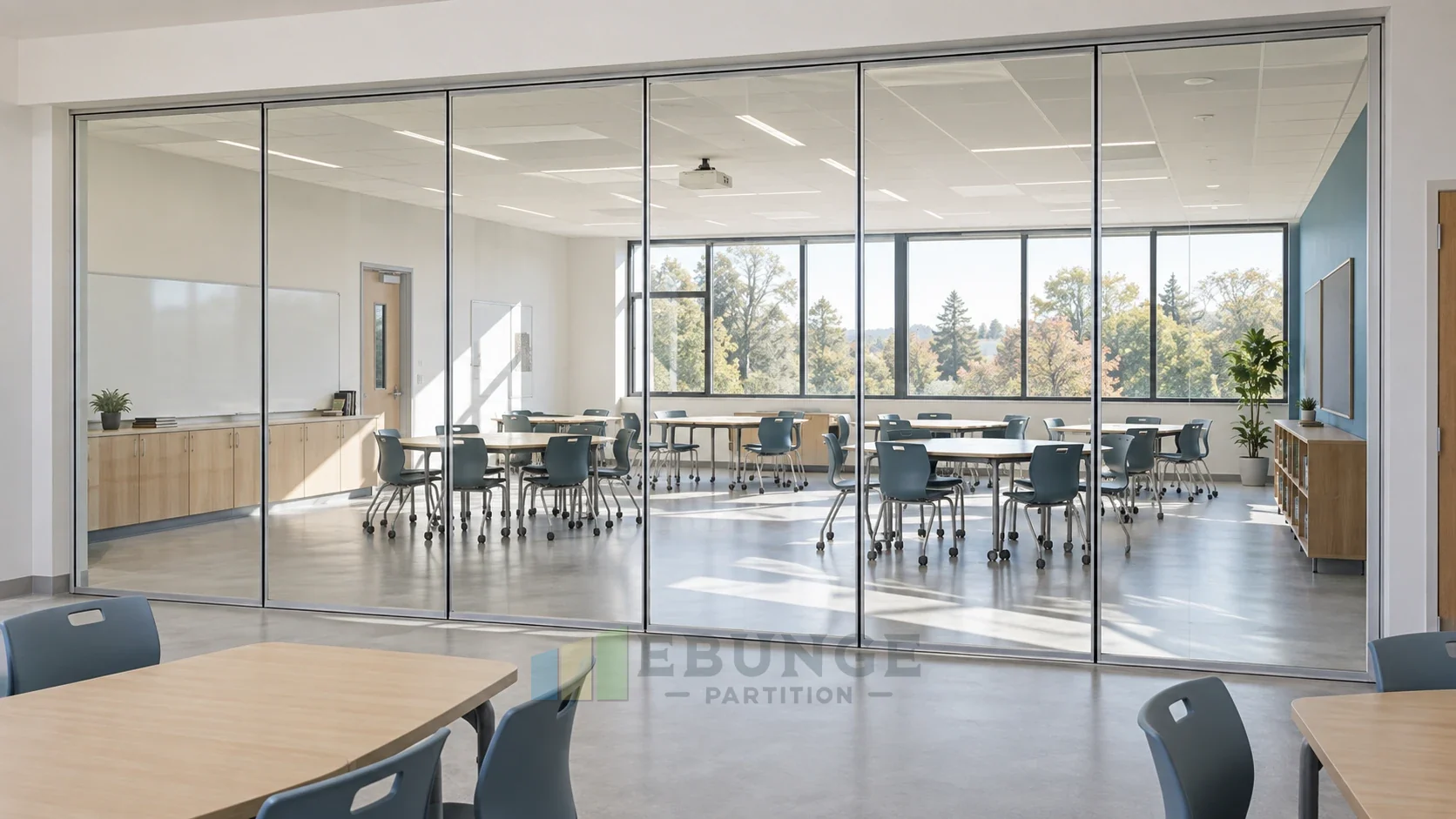
Do not let a bidder substitute a generic rating for project-specific confirmation. The matrix should ask how the proposed configuration, interface conditions and surrounding construction are expected to be reviewed.
Acoustic review prompts
- What acoustic basis is stated in the project specification?
- Which documentation will the bidder submit for review?
- Which interfaces and penetrations need coordination?
- What remains to be confirmed after award?
Plan Procurement and Tender Review Coordination
Procurement and tender review coordination fails when technical questions arrive after pricing. The matrix should assign a reviewer for each section: layout and route, finishes, pass-door requirements, documentation and site interfaces.
Set a clarification window before bids close. Require bidders to state assumptions in writing. If a bidder cannot confirm a project-specific item, record it as an open item rather than a compliance claim.
Numbered review process
- Issue the matrix with the tender package and a marked-up layout.
- Require each bidder to complete every row, including open items.
- Compare responses side by side and flag unsupported statements.
- Request clarification on route, support, acoustic and documentation gaps.
- Confirm final requirements before award and record them in the contract documents.
Use Documentation to Close the Gaps
The matrix should list the documents expected at each stage: tender clarification, shop drawing review, finish approval and handover. Project documentation can be discussed with the supplier so the team knows what to request.
Link the matrix to your internal review resources, such as engineering resources, and keep a clear record of what was confirmed and what remains open. This is especially important for renovation projects where existing conditions may limit the route or parking position.
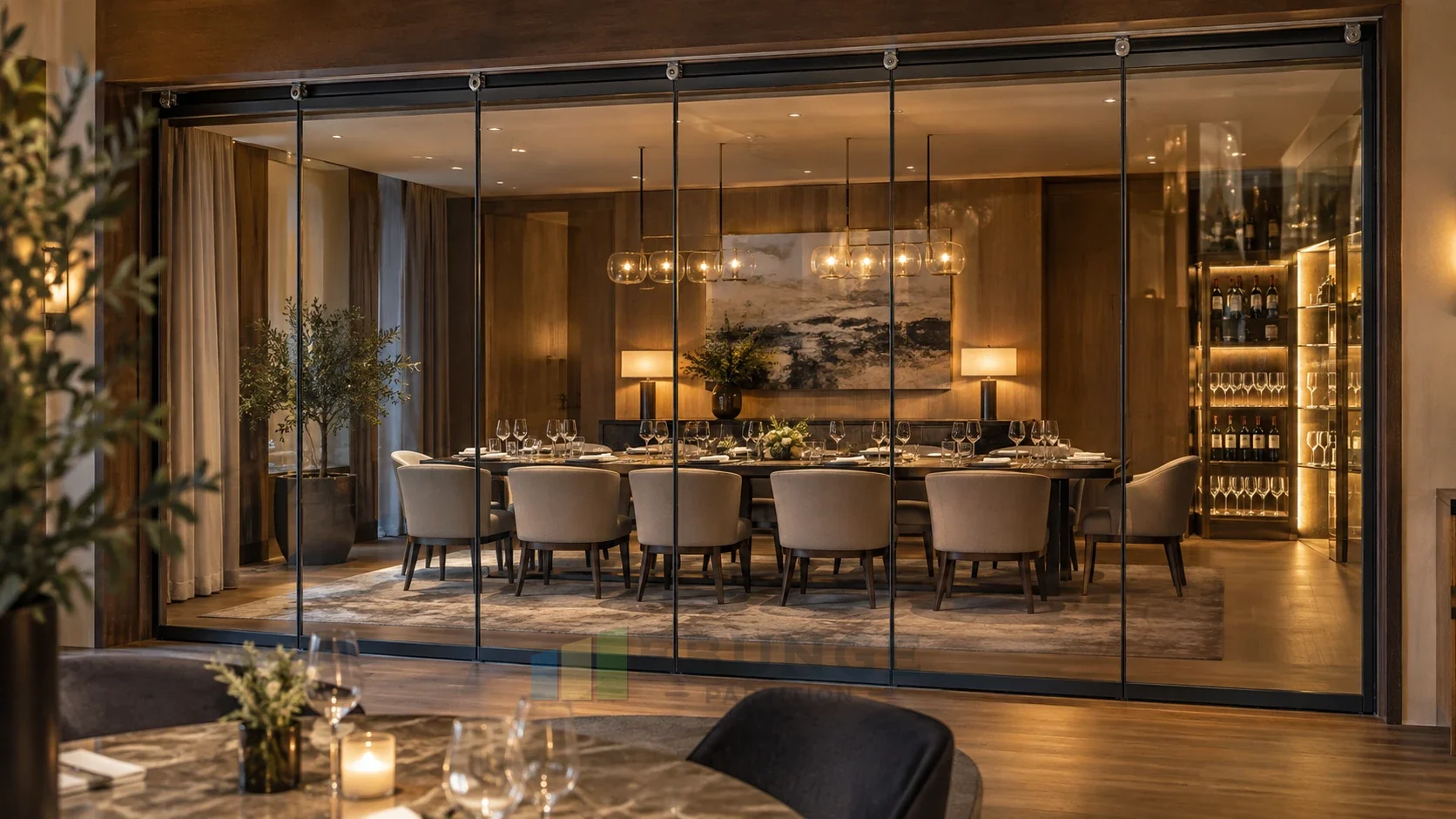
For application context, review applications and solutions pages, but treat every named venue as an example only. Movable partitions can be considered wherever flexible spatial division, combination or reconfiguration is required.
Frequently Asked Questions
What is the main purpose of a sliding glass partition tender review matrix?
It creates a like-for-like comparison of bidder responses against project requirements, while separating confirmed product facts from items that still need project-specific confirmation.
Should the matrix include acoustic ratings?
It should capture the project’s acoustic intent and the documentation basis.
How do we handle pass-door requirements?
Record whether a pass door is required, where it is expected and how it relates to the movement route. Pass-door requirements can be discussed with the supplier and confirmed against the layout.
Can the matrix specify a finish?
Yes. Confirmed finish options include laminate, melamine, fabric, leather, glass and other approved surfaces. The matrix should require sample approval and project specification confirmation.
What if the stacking position is not yet decided?
Mark it as provisional and require a drawing review. Parking style is customized to the layout and project requirements, and compact stacking may be possible when the coordinated design permits it.
Does every bidder need to provide the same documents?
The matrix should define the required document list for the project. Project documentation can be discussed so the team knows what to request at tender, drawing review and handover stages.
For the next planning step, review the related EBUNGE guide and confirm the opening, ceiling condition, layout, finish direction and acoustic requirement for the project.
Conclusion and Next Step
A strong sliding glass partition tender review matrix does not promise performance. Start with the movement route, separate confirmed facts from assumptions, and keep acoustic, support and dimensional items open until the drawings are reviewed.
To discuss your project requirements, contact EBUNGE with your layout, route sketch and tender questions. The team can review pass-door requirements and project documentation with you, while final support, acoustic and dimensional requirements remain subject to project-specific confirmation.