

What Should a Procurement Team Ask Before Shortlisting a Glass
Quick project answer
Review focus: glass partition procurement shortlisting.
Glass partition procurement shortlisting is not a finish-selection exercise. It is a structured review of how a proposed system will be supported, operated, parked, and documented on a specific project. For overseas contractors, architects, interior designers, owners, and renovation teams, the goal is to shortlist only those options whose claims can be traced to maintained product facts and project-specific drawings. This article sets out the questions that keep that review evidence-bounded.
Start With the Movement Route, Not the Finish
Project review term: glass partition procurement shortlisting.
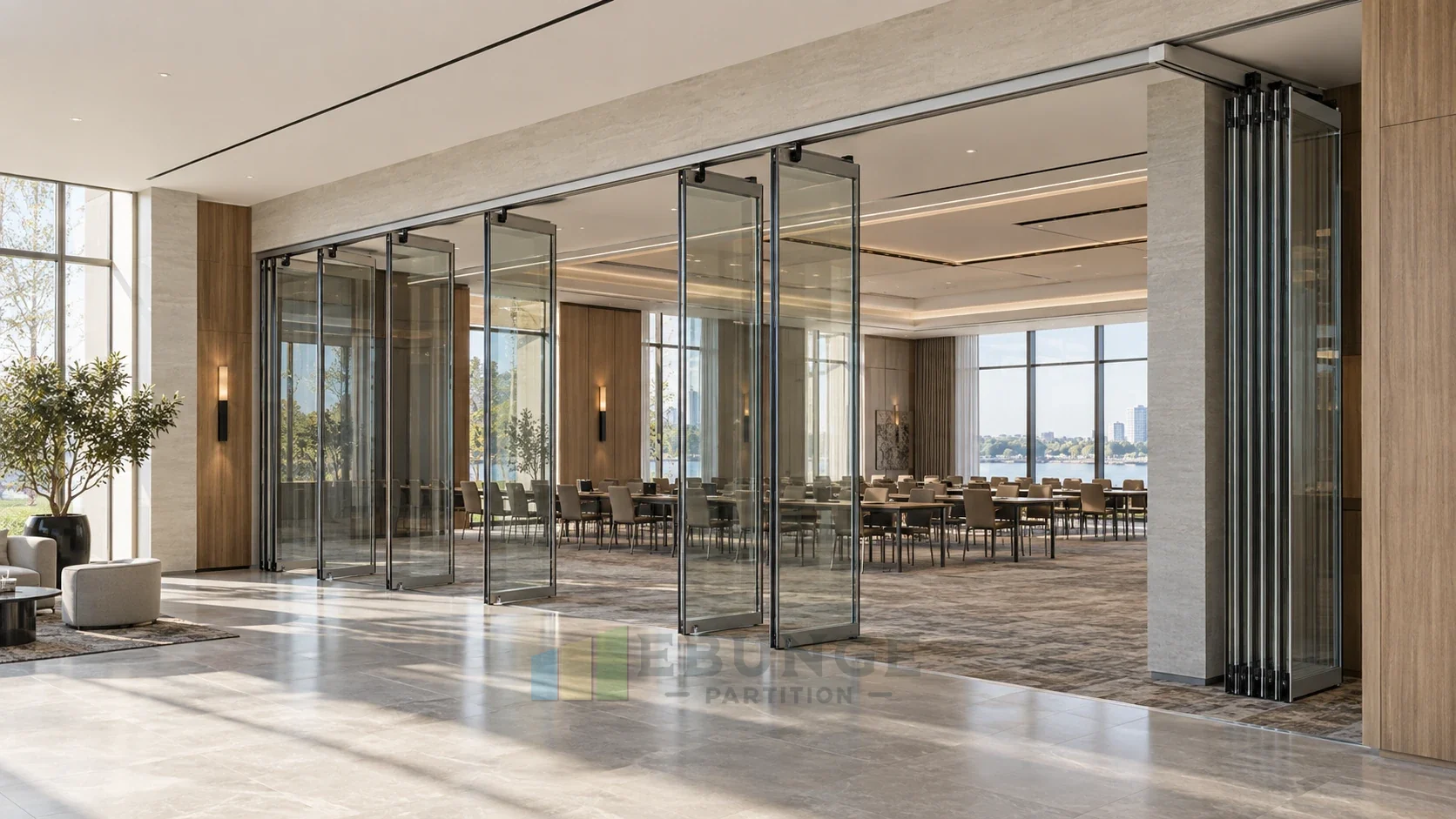
Movable glass partition panels are individually movable, suspended from a top track, cross the opening without a floor track, and park at a planned stacking position. That single sentence carries most of the early procurement questions.
Ask the design team to mark the straight, turning, and stacking routes on the layout. Then ask whether every proposed movement path has a continuous overhead route and whether the supporting structure along that route has been reviewed.
Separate Maintained Facts From Project Assumptions
Coordination scope: glass partition procurement shortlisting.
Procurement shortlisting fails most often when a maintained fact is stretched into a project claim. The suitability of each route and parking arrangement depends on the approved layout, circulation, ceiling interfaces and operating sequence. A top-hung system does not confirm that a specific ceiling can carry it.
Use a simple evidence note in the tender file. For each statement a supplier makes, record whether it is a maintained product fact, a project-specific confirmation, or an open item.
Evidence note for the tender file
Maintained product fact: panels are top-hung and move without a continuous floor running track. Project-specific confirmation required: support along the full overhead route, parking layout, opening dimensions, and finish suitability for the intended room. Open item: any performance figure not supported by project documentation.
Questions to Ask About Support and Structure
Checklist focus: glass partition procurement shortlisting.
The overhead route is only as good as what holds it. The exact overhead route and support arrangement must be confirmed by the responsible project team from coordinated drawings. These are coordination questions, not product claims.
If the answers are vague, the shortlist is premature. A supplier can describe a system, but the project team must confirm that the building can receive it. Keep that boundary explicit in the tender documents so that no bidder is compared on an assumption that has not been reviewed.
Support review checklist
- Has the full overhead route been marked on the layout, including turns and parking?
- Is the supporting structure along that route identified and reviewed by the responsible party?
- Are there conflicts with services, ceiling zones, or existing finishes?
- Is the parking position clear and reachable from the opening?
- Has the project team confirmed who signs off on the support condition?
Finish Options and What They Do Not Prove
Review focus: glass partition procurement shortlisting.
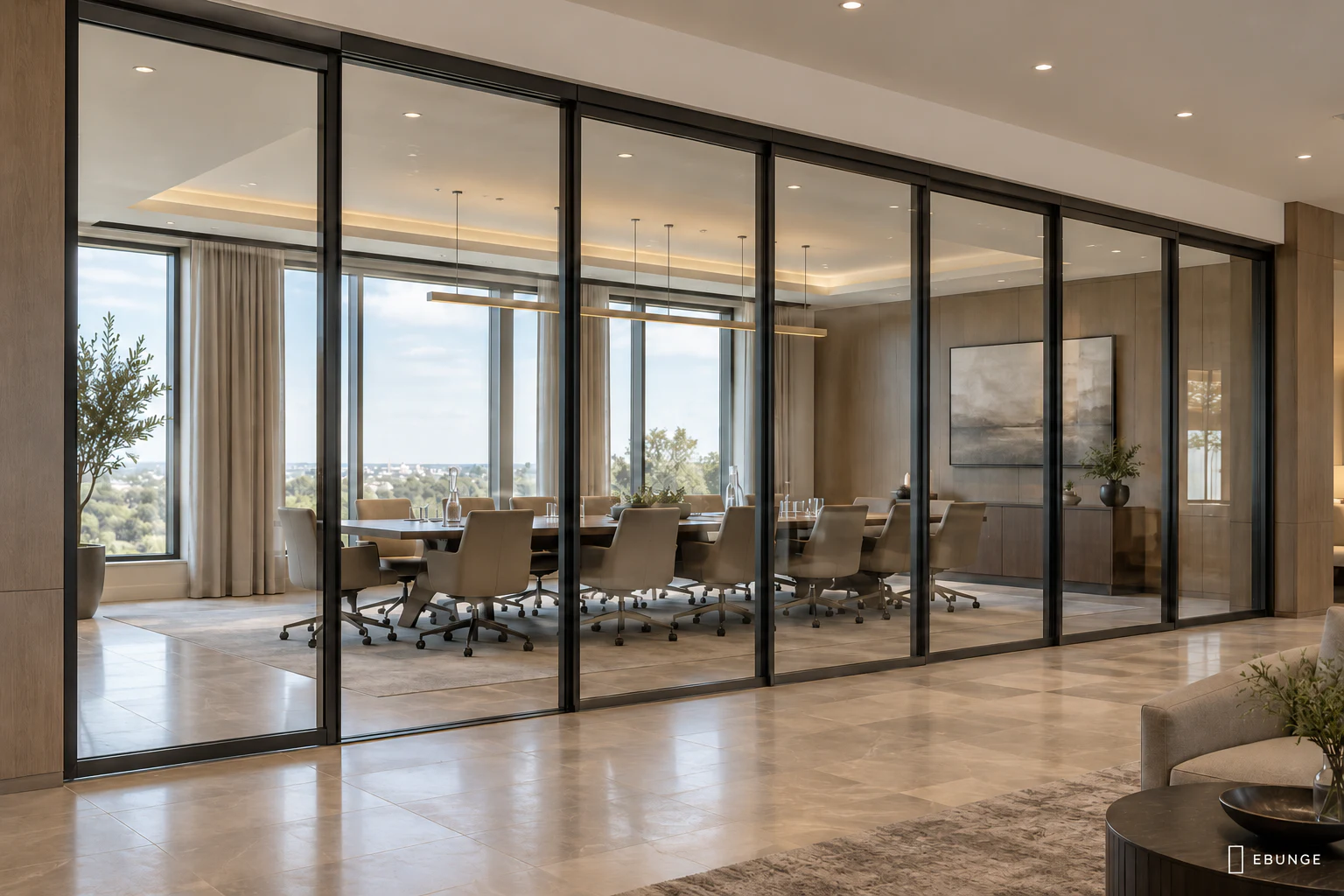
Confirmed finish options include laminate, melamine, fabric, leather, glass, and other approved surfaces. These options affect appearance and may affect how a panel is specified, but they do not by themselves establish acoustic, fire, durability, or maintenance performance. A glass finish is not a performance rating.
When comparing shortlisted suppliers, ask them to state which finishes are confirmed for the project and which still require approval. Then ask what project-specific information is needed before a finish can be accepted. This prevents a finish sample from being treated as evidence of a performance outcome.
Acoustic Concepts Without Invented Numbers
Project review term: glass partition procurement shortlisting.
Procurement teams should ask how acoustic requirements will be confirmed for the project, what documentation will be provided, and which project conditions affect the result. Do not accept a shortlist position built on an unsupported acoustic claim.
Pass Doors, Parking, and Layout Coordination
Pass-door requirements and project documentation can be discussed with the supplier. A pass door changes the panel layout, the movement sequence, and sometimes the parking plan. It should be raised early, not added after the shortlist is fixed.
Parking style is customized to the customer layout and project requirements and may support compact stacking when the coordinated design permits it. That means the parking question is a layout question. Ask where panels will rest, how they will be reached, and whether the stacking zone conflicts with circulation or services.
Shortlisting comparison table
| Review area | What to ask | Evidence needed |
|---|---|---|
| Movement route | Are straight, turning, and stacking routes marked? | Layout drawing with continuous overhead route |
| Support | Who confirms the supporting structure? | Project-specific structural review |
| Finish | Which finishes are confirmed for this project? | Approved finish schedule and samples |
| Acoustic | How will acoustic requirements be confirmed? | Project-specific documentation, not a generic claim |
| Pass door | Is a pass door required and where? | Coordinated panel and route drawing |
| Parking | Where will panels stack and how are they reached? | Layout showing clear stacking position |
Documentation and Tender Review Discipline
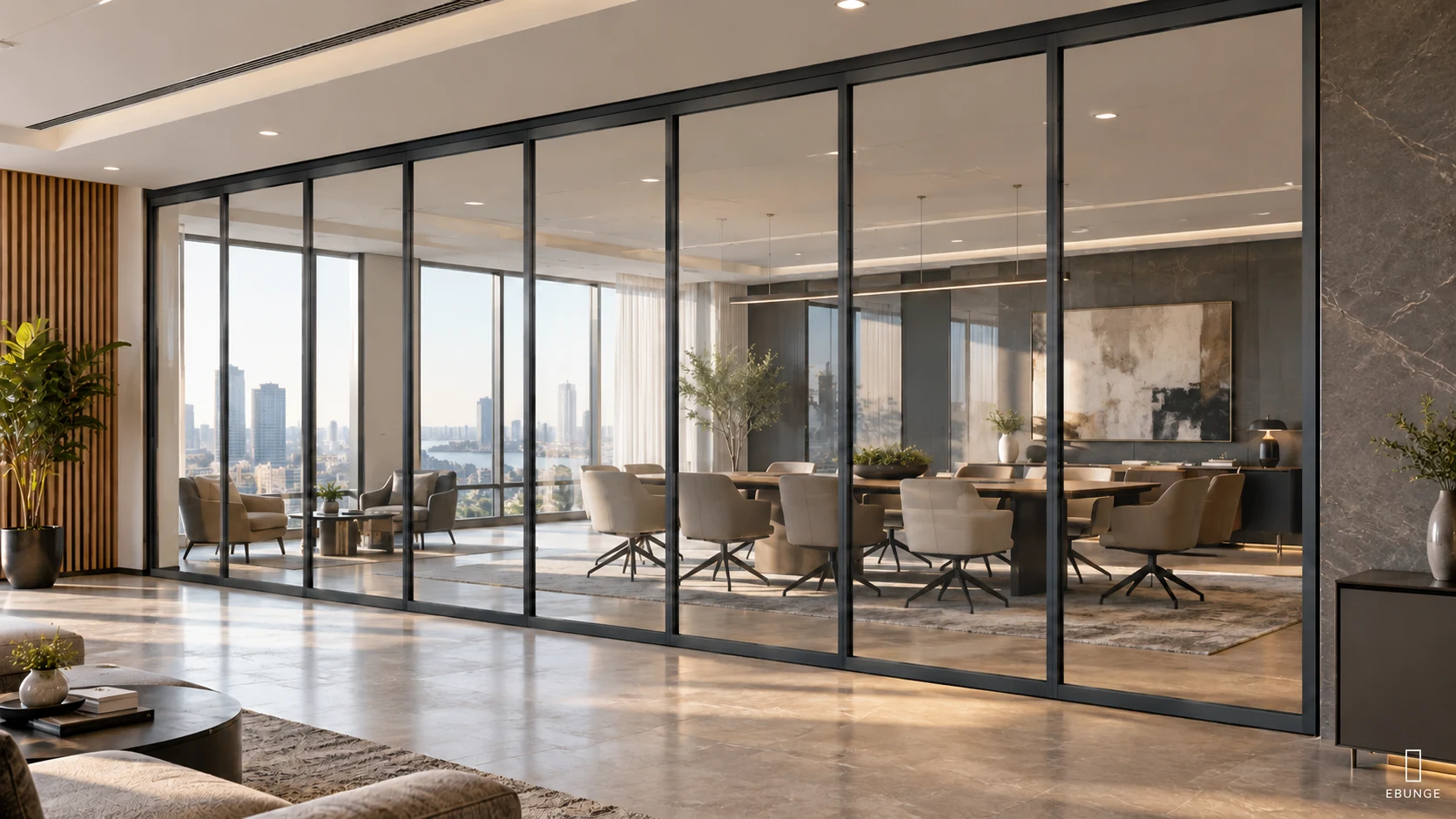
A shortlist is only as strong as the documents behind it. Ask each supplier to identify what is a maintained product fact, what is a project-specific confirmation, and what remains open. Then compare suppliers on the same basis.
Keep the project drawings current. If the layout changes, the movement route, parking plan, and support review may change with it. A shortlist that was valid last month may need to be revisited. Build that review step into the procurement schedule rather than treating it as an exception.
FAQ: Glass Partition Procurement Shortlisting
What information should be ready before shortlisting a glass partition?
Prepare the layout with straight, turning, and stacking routes marked, the opening dimensions, the intended parking position, the required finishes, and any pass-door requirement. Also identify who will confirm the supporting structure along the overhead route. Without these, the shortlist is based on assumptions rather than project conditions.
Can a supplier confirm acoustic performance from a product description?
No. Confirm acoustic requirements through project-specific documentation and review, not through a generic product statement.
Does a top-hung system need a floor track?
EBUNGE movable partition panels are top-hung and move without a continuous floor running track or floor hardware along the partition line. The exact route, junction arrangement, continuous overhead path and parking position must be confirmed from the coordinated project drawings.
How should finish options be compared during shortlisting?
Compare confirmed finish options such as laminate, melamine, fabric, leather, glass, and other approved surfaces on the basis of project approval, not assumed performance. A finish choice does not confirm acoustic, fire, durability, or maintenance outcomes. Ask what project-specific information is still required.
What if the parking position is not yet decided?
Parking style is customized to the customer layout and project requirements and may support compact stacking when the coordinated design permits it. If the parking position is undecided, treat it as an open item and resolve it with the layout before finalizing the shortlist.
How do we keep the shortlist fair across suppliers?
Use the same evidence categories for every bidder: maintained product facts, project-specific confirmations, and open items. Ask each supplier to state which category applies to each claim.
For the next planning step, compare application solutions, review the related EBUNGE guide, review the related EBUNGE guide and confirm the opening, ceiling condition, layout, finish direction and acoustic requirement for the project.
Conclusion: Shortlist on Evidence, Not Assumptions
A disciplined glass partition procurement shortlisting process asks the same questions of every option: how the panels move, how the route is supported, how parking is coordinated, which finishes are approved, and how acoustic requirements will be confirmed. None of those answers should be inferred from a photograph, a finish sample, or a generic description. They should come from maintained product facts and project-specific drawings.
Before the shortlist is fixed, confirm the support, acoustic, and dimensional requirements for the project. If a requirement cannot be confirmed yet, record it as an open item rather than filling the gap with an assumption. That single habit protects the tender review from claims the project cannot support.
To discuss pass-door requirements, project documentation, or a specific layout, contact EBUNGE. You can also review the custom movable glass partition systems and the broader product range before the next review meeting.